
How to Polish Diamond Plate Aluminum & Clean Oxidation
Posted by Flitz Premium Polishing Products on 11th Nov 2026
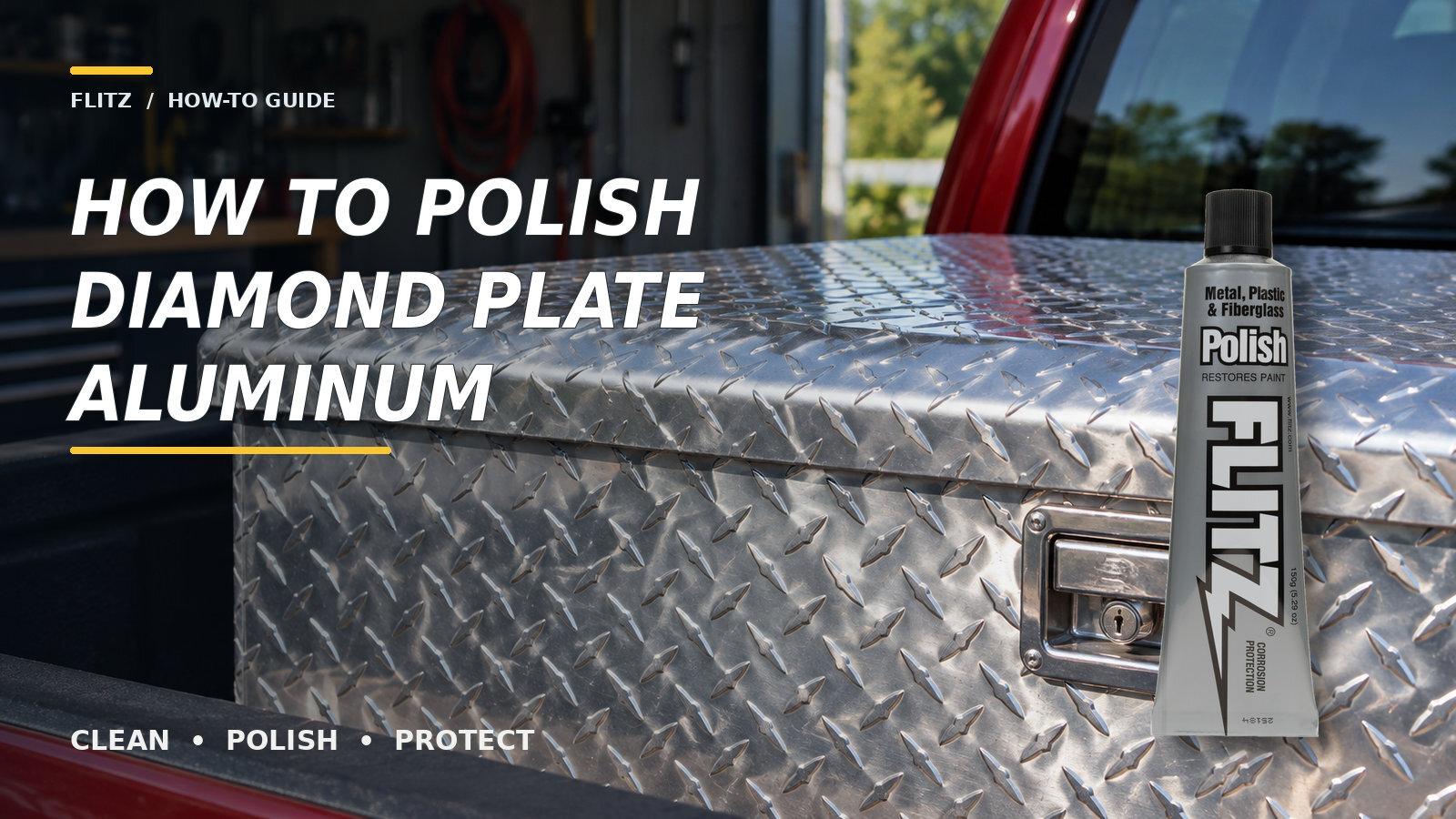
Diamond plate aluminum is built for tough jobs. You'll find it on truck toolboxes, running boards, steps, trailers, and equipment. But years of road grime, moisture, and exposure can leave that once-bright metal looking dull, cloudy, or oxidized.
Wondering how to polish diamond plate without damaging its raised pattern? The key is knowing what type of aluminum finish you have, cleaning it properly, and choosing the right polishing method.
Whether you're restoring a weathered truck toolbox or maintaining aluminum step plates, here's how to clean, polish, and protect diamond plate aluminum.
Can You Polish All Aluminum Diamond Plate?
Before reaching for metal polish, take a moment to inspect the finish. Not every diamond plate surface should be treated the same way.
Bare aluminum diamond plate: This is generally the best candidate for polishing. Oxidation, discoloration, and surface dullness can often be improved with proper cleaning and polishing.
Clear-coated or painted diamond plate: These finishes have a protective coating over the metal. Polishing the surface won't necessarily remove oxidation trapped beneath a damaged coating. Follow the finish manufacturer's care instructions rather than attempting to polish through the coating.
Anodized aluminum: Anodizing changes the aluminum's surface. It should not be treated like bare aluminum when attempting to create a mirror shine.
If you're unsure what finish you have, check with the manufacturer and always test your cleaning or polishing method in an inconspicuous area.
What You'll Need to Clean and Polish Diamond Plate
Gather these supplies before starting:
- Mild car wash soap, water, and a soft-bristle brush
- Clean towels or Flitz Premium Microfiber Polishing Cloths
- Flitz Metal PreClean for stubborn buildup and oxidation on compatible surfaces
- Flitz Paste Metal Polish or Flitz Liquid Metal Polish
- Flitz BuffBall and a compatible drill for optional machine polishing
- Flitz Ceramic Sealant for added protection
Not every project requires every product. Lightly weathered diamond plate may only need washing and hand polishing, while heavily oxidized surfaces may benefit from additional preparation.
How to Clean and Polish Aluminum Diamond Plate
Step 1: Wash Away Dirt and Road Grime
Always begin with a clean surface.
Rinse the aluminum diamond plate to remove loose dirt, sand, road salt, and other debris. Then wash with mild car wash soap and water.
Use a soft-bristle brush to reach between the raised diamond-shaped patterns, where dirt can collect.
Rinse thoroughly and dry with a clean towel.
Pro Tip: Don't begin polishing over trapped dirt. Small particles caught between the towel and aluminum can create additional scratches.
Step 2: Clean Oxidized Aluminum Diamond Plate
If your diamond plate still looks dull, stained, or chalky after washing, surface oxidation may be contributing to the problem.
On suitable bare aluminum, Flitz Metal PreClean can help remove stubborn oxidation, corrosion residue, and buildup before polishing.
Apply according to the product label, working in manageable sections. Allow it to work for the directed contact time, up to one minute, without letting the cleaner dry. Gently agitate stubborn areas with an appropriate brush if needed, then rinse thoroughly with water.
Wear the protective equipment specified on the product label and test an inconspicuous area first.
Metal PreClean is a preparation product, not a finishing polish. The next step is what helps bring back the shine.
Keep in mind that deep pitting, severe corrosion, and damaged coatings cannot always be corrected with cleaning products or ordinary polishing.
Step 3: Apply Flitz Metal Polish
Once the diamond plate is clean and dry, it's time to polish.
For bare aluminum, start with a small amount of Flitz Paste Metal Polish on a clean cloth.
Test a small area before continuing. Work the polish across the metal using controlled pressure, paying attention to the raised diamond pattern and the spaces between it.
Work approximately one square foot at a time rather than attempting to polish an entire truck toolbox or large panel at once.
As the polish works on bare aluminum, you may notice dark residue transferring to the cloth. Use a clean section of towel as needed and buff away the remaining polish before it dries.
Step 4: How to Polish Diamond Plate by Hand
Hand polishing is a practical choice for smaller pieces, narrow sections, and areas where you want more control.
A clean, soft towel with a thicker pile can help reach into the grooves surrounding each raised diamond.
Continue polishing one small section at a time, then buff with a separate clean towel until the surface looks bright and even.
For lightly oxidized aluminum, this may be all you need to achieve a noticeable improvement.
Pro Tip: The raised pattern makes diamond plate harder to polish than flat sheet aluminum. Give the grooves extra attention, but avoid excessive force or aggressive scrubbing that could alter the finish.
Step 5: Use a BuffBall for Larger Areas
Have a large truck toolbox, running board, or aluminum panel to polish?
The Flitz BuffBall can make the job easier by reaching around the raised pattern and into areas that are difficult to polish with a flat cloth.
Apply a thin layer of Flitz Metal Polish to a compatible surface, then use the BuffBall with a suitable drill according to its instructions.
Begin slowly and use light, controlled pressure. Follow the BuffBall's operating instructions and do not exceed its 2,500 RPM maximum.
Take extra care around sharp edges, fasteners, seams, and protruding hardware. Stop before the attachment can catch on an edge.
Buff away leftover residue with a clean microfiber towel.
Watch Flitz Clean and Polish Diamond Plate Aluminum
See diamond plate cleaning and polishing demonstrated using Flitz Metal, Fiberglass & Paint Polish in this video from Flitz.
Step 6: Protect the Polished Aluminum
After putting in the work to restore the shine, help keep the finish looking its best.
Flitz Ceramic Sealant is designed for compatible surfaces, including aluminum and diamond plate.
Apply it to the clean, finished surface according to the label directions, then buff with a microfiber cloth.
The protective finish helps repel water, dirt, and everyday grime, making future cleaning and maintenance easier.
Regular washing and periodic protection can help reduce the buildup that contributes to a dull-looking finish.
How to Clean an Aluminum Diamond Plate Truck Toolbox
Truck toolboxes are among the most common applications for diamond plate aluminum, and they take a beating from weather, road spray, and daily use.
If you're wondering how to clean an aluminum toolbox that's turned dull or oxidized, start by checking whether the metal is bare or coated.
For bare aluminum toolboxes:
Wash first. Remove dirt, road film, and other loose contamination with soap and water.
Address stubborn buildup. If oxidation or staining remains, consider Flitz Metal PreClean where appropriate, following all label instructions.
Polish in sections. Use Flitz Paste or Liquid Metal Polish to work across the lid, front panel, and sides. Pay special attention to the raised diamond pattern.
Buff carefully. Hand polish around hinges, locks, seams, and handles. A Flitz BuffBall can help with larger accessible sections.
Apply protection. Once the surface is clean and polished, finish with Flitz Ceramic Sealant where suitable.
The same basic approach can be used for bare aluminum running boards, step plates, and diamond plate trim when the material and finish are compatible.
Watch a Quick Diamond Plate Polishing Demonstration
Want to see the shine up close? Check out this quick Flitz diamond plate polishing Short.
Can You Restore Heavily Oxidized Diamond Plate Aluminum?
Yes, many weathered aluminum surfaces can be improved, but the result depends on the metal's condition.
Light oxidation and ordinary dullness may respond well to cleaning and polishing.
Heavier oxidation can require additional preparation and repeated polishing.
Deep scratches, corrosion pits, or physical damage are different problems. Metal polish cannot replace missing material or repair a failing protective coating.
Aggressive sanding and other metal-removal methods may also flatten the raised diamond pattern or change its appearance. If preserving that texture is important, avoid these methods unless you're prepared for the risks involved.
For more information on general aluminum restoration, visit our guide to How to Polish Aluminum the Right Way.
How to Keep Diamond Plate Aluminum Shiny
Maintaining your aluminum regularly is usually easier than restoring years of neglected oxidation.
Wash away road salt, dirt, and grime before heavy buildup develops. Dry the surface after washing, especially around seams and textured areas.
Check the finish periodically for new stains, oxidation, or coating damage, and use the appropriate cleaning method for the material.
For polished bare aluminum, reapply suitable protection according to product instructions and environmental conditions.
Frequently Asked Questions
What's the best way to clean aluminum diamond plate?
Start with mild soap, water, and a soft brush to remove dirt from the raised pattern. For stubborn oxidation or buildup on compatible bare aluminum, Flitz Metal PreClean can help prepare the surface for polishing.
How do you polish oxidized diamond plate aluminum?
Clean away dirt first, address oxidation with an appropriate preparation product if needed, and then use Flitz Metal Polish on compatible bare aluminum. Buff in small sections until the desired shine develops.
Can you polish aluminum diamond plate without a machine?
Absolutely. A clean towel and a suitable metal polish can produce noticeable results on bare aluminum. Hand polishing also gives you additional control around edges, seams, and small details.
Can a BuffBall polish aluminum diamond plate?
Yes. The Flitz BuffBall is useful for reaching around raised diamond plate patterns. Follow the tool's instructions, begin slowly, and take care around sharp edges and hardware.
Can you make an old aluminum toolbox look new again?
Many aluminum toolboxes can be significantly improved through cleaning and polishing. However, deep pitting, scratches, and damaged coatings may prevent a complete restoration to their original appearance.
Bring Back the Shine with Flitz
Whether you're maintaining an aluminum truck toolbox, restoring diamond plate steps, or cleaning up weathered aluminum trim, the right process makes a difference.
Clean. Polish. Protect.
Start with a clean surface, choose the correct Flitz polish for your material, and finish with protection that helps make future maintenance easier.
Explore Flitz Paste Metal Polish, Flitz Metal PreClean, and the Flitz BuffBall to find the right combination for your next aluminum restoration project.