
How to Clean Pewter: Finishes, Tarnish & Care
Posted by Flitz Premium Polishing Products on 18th Nov 2026
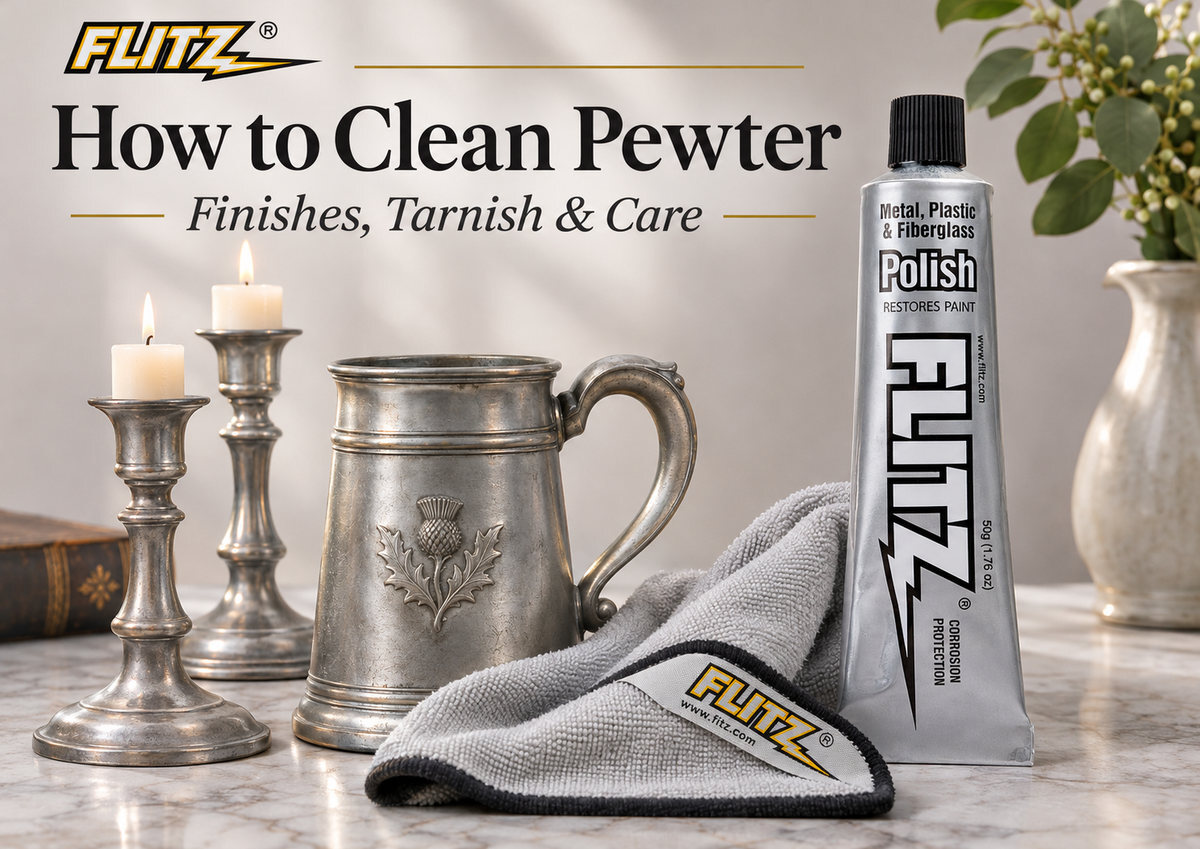
Wondering how to clean pewter without damaging its finish? Start with a soft cloth, mild dish soap, and warm water. That is often all you need to remove dust, fingerprints, and everyday grime. If you want to bring back the shine on modern, uncoated, polished pewter, a compatible metal polish may help. Antique or intentionally darkened pewter is a different story: its patina may be part of its character and value.
Whether you have pewter candlesticks, jewelry, a decorative plate, or a family heirloom, this guide explains how to clean it, when to polish it, and when to leave the surface alone.
First, Identify the Type of Pewter You Have
Before reaching for any cleaner, look at the finish. Different pewter pieces are meant to look different, and polishing them all the same way can change their appearance.
- Polished pewter: Bright or shiny modern pewter may be suitable for occasional gentle polishing if the maker allows it.
- Satin or matte pewter: These pieces have a softer, intentionally muted finish. Polishing could create shiny patches or change the original texture.
- Antique or patinated pewter: Older pieces may have a gray or darkened surface that collectors want to preserve. Removing it can affect the piece's character and potentially its value.
- Coated, painted, or plated items: Follow the item's care instructions rather than treating it as bare pewter.
Not sure what you have? Start with gentle dusting and cleaning only. If a piece is old, valuable, or sentimental, consult a qualified conservator before trying to restore its shine.
How to Clean Pewter With Soap and Water
For most sturdy, modern pewter pieces that the maker allows you to wash, use this simple method first:
- Remove dust. Wipe the surface gently with a clean, soft cloth to lift loose particles before washing.
- Mix a mild cleaning solution. Add a small amount of gentle dish soap to warm (not boiling) water.
- Wash by hand. Lightly wipe the pewter with a soft cloth dampened in the soapy water. Avoid hard scrubbing, especially around raised details.
- Remove the soap. Wipe with a separate cloth dampened with clean water, or rinse briefly if the item is designed to be washed.
- Dry immediately. Use a clean, soft microfiber cloth to dry crevices and prevent lingering moisture.
For decorative pieces with glued decorations, gemstones, delicate fittings, or an unknown finish, do not soak or submerge them. Use a barely damp cloth instead, following the maker's instructions.
A Flitz Premium Microfiber Polishing Cloth is a useful option for routine dusting, drying, and buffing.
How to Polish Pewter When You Want More Shine
Cleaning removes dirt; polishing can change the metal's surface appearance. If your item is modern, bare, polished pewter and its manufacturer permits metal polish, you can take an additional step to refresh its shine.
Flitz Paste Metal Polish and Flitz Liquid Metal Polish both list pewter among their compatible metals. However, that does not mean every pewter finish or antique object should be polished.
- Clean and dry the piece first. Dirt trapped under a cloth may mark soft metal.
- Test a small, inconspicuous spot. Confirm that the result matches the finish you want to preserve.
- Apply a very small amount of Flitz polish to a soft cloth, following the product label directions.
- Polish gently by hand. Use light pressure and work on a small area at a time. Avoid powered buffers and abrasive pads on delicate pewter.
- Buff off the polish before it dries with a separate clean, soft cloth, following the product directions.
- Inspect the finish. Stop if the surface becomes unevenly shiny or changes in a way you did not intend.
Important: Do not use this polishing method on antique patinas, plated or coated surfaces, intentional matte finishes, or unknown materials without specific approval from the item's manufacturer or a restoration professional. For pewter drinking vessels or tableware, follow the maker's food-contact care directions; do not assume a polished surface is suitable for food or beverages.
How to Clean Tarnished Pewter or Dark Spots
People often search for ways to clean tarnished pewter, but pewter does not tarnish in quite the same way as silver. Depending on the alloy, age, and storage conditions, it may develop a dull or darker oxidized surface.
Try gentle washing first. If the piece is modern and intended to stay bright, careful polishing may help with light discoloration. But if darkening is part of an antique patina, cleaning it away may be undesirable.
Deep black patches, pitting, flaking, cracks, or severe corrosion are not just everyday dirt. Avoid aggressive home treatments, especially on old pewter; seek specialist advice instead.
Special Care for Pewter Jewelry, Candlesticks, and Dishes
Pewter Jewelry
Use a soft, dry or slightly damp cloth for regular cleaning. Jewelry may include coatings, plated components, gemstones, adhesives, or other materials that cannot tolerate metal polish. Use a polishing product only if the entire piece is compatible and the maker approves it.
Pewter Candlesticks and Decorative Pieces
Dust regularly and clean gently around grooves and decorative details. Avoid scraping with hard tools. Never expose pewter candlesticks to excessive heat or let candles burn down into their sockets.
Pewter Plates, Tankards, and Serving Pieces
Check whether the piece is modern and intended for food use. Antique pewter may contain lead, and an item's age, alloy, and condition are not always obvious from appearance. Do not use unidentified antique pewter for food or drinks. For food-contact items, follow the manufacturer's washing and care instructions rather than applying a household metal polish to contact surfaces.
Pewter Cleaning Mistakes to Avoid
- Putting pewter in the dishwasher: Heat, detergent, and rough handling can damage its finish.
- Using harsh scrubbing pads or wire brushes: Pewter is comparatively soft and can be scratched or dented.
- Trying strong acids or homemade chemical mixtures: Vinegar, aggressive cleaners, and other DIY methods can produce unpredictable results on unfamiliar alloys or finishes.
- Polishing intentional patina away: A dark finish may be desirable, especially on antique pieces.
- Assuming all metal polishes are interchangeable: Follow the pewter item's care directions and use products that specifically list pewter as a compatible metal.
Frequently Asked Questions About Cleaning Pewter
Can you use Flitz metal polish on pewter?
Yes. Flitz Paste Metal Polish and Flitz Liquid Metal Polish list pewter as a compatible metal. They are options for modern, uncoated pewter intended to have a polished finish. First verify the item's care requirements, test an inconspicuous area, and do not polish antique patinas or specialty coatings without professional or manufacturer guidance.
Does pewter tarnish?
Pewter can dull or darken with age and exposure, but it does not tarnish exactly like silver. Some older pieces are valued for that darker patina.
How do you clean antique pewter?
Start with gentle dusting. For valuable, fragile, or heavily oxidized antiques, seek professional conservation advice before washing or polishing. Avoid trying to make old pewter look brand new without understanding the finish.
Can you clean pewter with vinegar or baking soda?
We recommend starting with mild dish soap and water rather than homemade acidic or abrasive treatments. If the piece needs more than routine cleaning, use a method approved for its particular finish.
How often should pewter be cleaned?
Dust as needed and wash modern, washable items when they are dirty. Polish only when the item is meant to be shiny and the finish actually needs it; frequent polishing is not required.
Keep the Right Pewter Finish Looking Its Best
The best way to clean pewter is to match the cleaning method to the piece. Routine grime often comes off with mild soap, water, and a soft cloth. Modern polished pewter may benefit from an occasional careful polish, while antique patinas and specialty finishes deserve a lighter touch.
For compatible polished pewter, explore Flitz Paste Metal Polish and finish with a Flitz Premium Microfiber Polishing Cloth. A little care goes a long way toward keeping your favorite pieces looking the way they were meant to.