
Brass Instrument Polishing & Care Guide
Posted by Flitz Premium Polishing Products on 20th Sep 2024
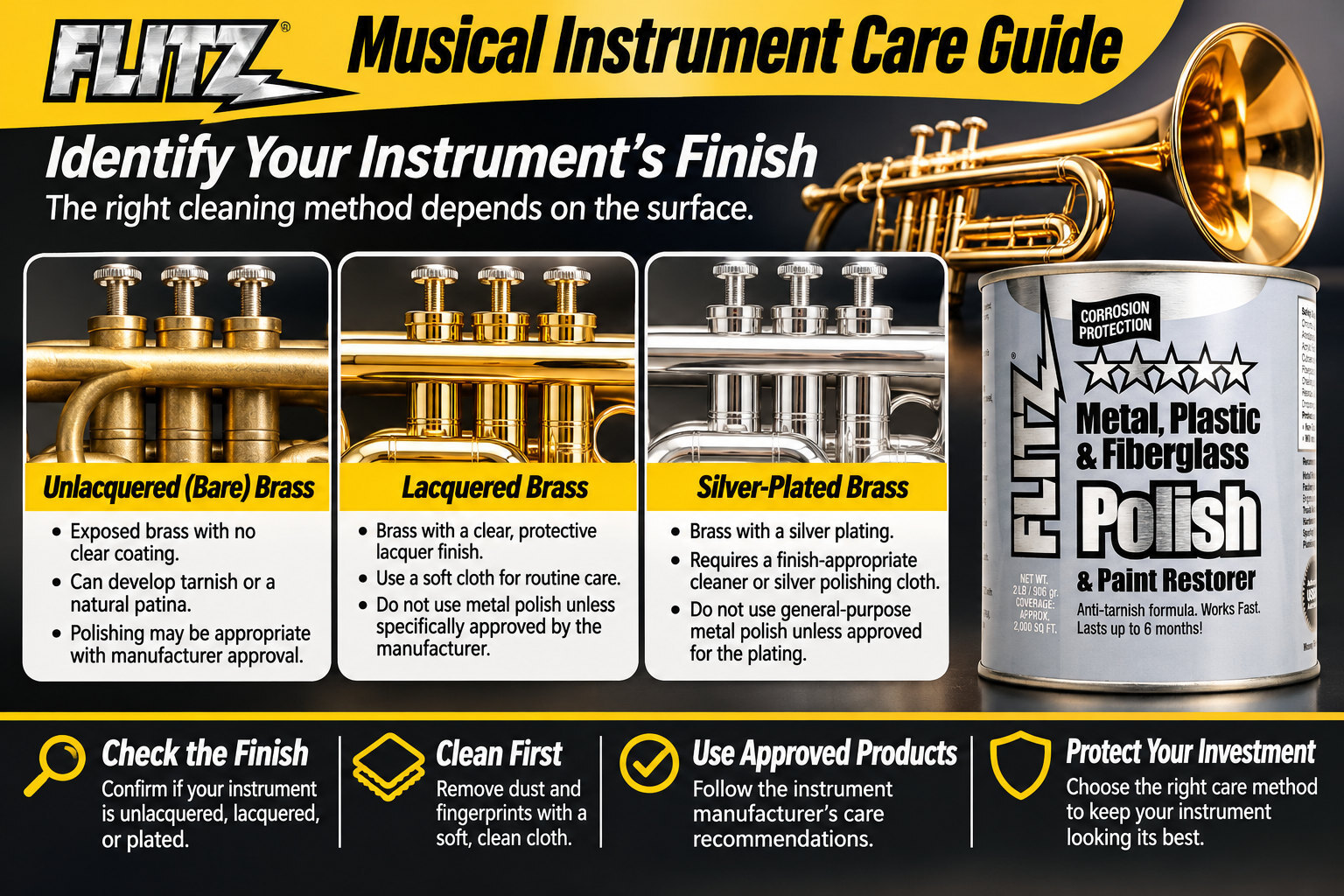
Musical instruments require careful maintenance, but not every shiny brass instrument should be treated with metal polish. A trumpet, trombone, or other brass instrument may be made from brass while having a lacquered, plated, or specialty finish that requires a different cleaning method.
Before choosing a brass instrument polish, identify the instrument's finish. Routine exterior cleaning and actual metal polishing are different tasks, and using the wrong product can damage a protective coating or delicate component.
In this guide, we'll explain when polishing may be appropriate, how to care for a trumpet or trombone's exterior, and what musicians should know before using Flitz products on their instruments.
Can You Use Brass Instrument Polish on Your Instrument?
The answer depends on the instrument's surface, not simply the metal underneath.
Many brass instruments are made from brass but finished with clear lacquer or metal plating. Those finishes influence which cleaning and polishing products are appropriate.
A general-purpose brass polish should not automatically be applied to a trumpet, trombone, French horn, or another instrument.
For everyday maintenance, a manufacturer-approved polishing cloth may be all that's needed to remove fingerprints and surface residue.
Before using any metal polish, confirm that both the instrument manufacturer's care guidance and the polish manufacturer's instructions permit the intended application.
Identify Your Instrument's Finish Before Polishing
Bare or Unlacquered Brass
Bare brass has no clear lacquer coating over the exposed metal. As it reacts with its environment, the surface may gradually develop tarnish or a natural patina.
Some musicians prefer that appearance, while others prefer a brighter finish.
Polishing exposed brass can remove surface oxidation, but it should only be considered when the manufacturer approves that treatment. Older instruments, valuable collectibles, and instruments with unknown finishes deserve particular caution.
Do not remove an existing lacquer coating to make an instrument suitable for polishing.
Lacquered Brass Instruments
Many trumpets, trombones, and other brass instruments have a protective lacquer finish.
Although the metal underneath is brass, ordinary brass polish is not necessarily appropriate for the lacquer itself.
For a lacquered trumpet or trombone:
-
Use a clean, soft cloth for routine exterior care.
-
Follow the instrument manufacturer's recommendations for approved cleaning products.
-
Avoid applying general-purpose metal polish unless the manufacturer specifically permits it.
-
Do not attempt to remove or polish through worn lacquer.
A dull-looking area may indicate coating wear rather than exposed metal that needs polishing.
Silver-Plated, Nickel-Plated, and Other Finishes
Silver-plated instruments can develop tarnish, but plated finishes require their own care methods.
Manufacturers may recommend an appropriate silver polishing cloth or a finish-specific cleaning product. The correct treatment depends on the plating, its condition, and the instrument's construction.
Nickel, gold, decorative plating, and specialty finishes should also be evaluated individually.
Never assume that a product suitable for solid brass is appropriate for a thin plated surface.
Cleaning vs. Polishing Brass Instruments
Understanding the difference helps prevent unnecessary work.
Cleaning removes surface dirt, fingerprints, oils, and other residues. Routine cleaning generally focuses on maintaining the instrument's existing finish.
Polishing addresses surface appearance and may remove tarnish or oxidation from compatible exposed metal.
These are not interchangeable procedures.
For many lacquered or plated instruments, routine cleaning with a suitable cloth is preferable to repeated metal polishing.
If a trumpet or trombone looks dull, identify whether the problem is ordinary residue, tarnished exposed metal, worn lacquer, or damaged plating before choosing a treatment.
How to Care for a Trumpet's Exterior
If you're wondering how to polish a trumpet, begin with the instrument's finish rather than reaching immediately for polish.
Step 1: Identify the Finish
Determine whether the trumpet has lacquered brass, unlacquered brass, silver plating, or another finish.
Check the instrument's documentation or contact its manufacturer if you're unsure.
Step 2: Remove Surface Dust and Fingerprints
Use a clean, soft cloth suitable for the instrument's finish to gently wipe accessible exterior surfaces.
Pay attention to areas that frequently contact hands.
Avoid rubbing trapped grit against the finish or applying unnecessary pressure around delicate fittings.
Step 3: Choose a Finish-Approved Cleaning Method
For lacquered instruments, follow lacquer-specific care recommendations.
For plated instruments, use the maintenance products approved for that plating.
For exposed, unlacquered brass, consult the manufacturer's guidance before deciding whether metal polishing is appropriate.
Step 4: Polish Only When Specifically Approved
If polishing is approved for the exact instrument surface, follow the product's application instructions and test only where the manufacturer permits.
Keep polishing products away from valve mechanisms, internal tubing, felts, pads, joints, and other sensitive components unless the manufacturer explicitly directs otherwise.
The objective is to maintain the instrument's finish without interfering with its mechanical operation.
For additional care guidance, see Yamaha's trumpet maintenance recommendations.
Trombone and Other Brass Instrument Considerations
The same finish-identification principles apply when cleaning or polishing trombones, French horns, tubas, euphoniums, and other brass instruments.
A trombone's outer bell and body may require different care from its slide components.
Do not use general-purpose metal polish on the inside of a trombone slide or on precision moving parts. Slide cleaning and lubrication should follow instrument-specific instructions.
Likewise, avoid treating valves, mouthpieces, tubing interiors, and other specialized components as ordinary decorative metal.
If the instrument has extensive tarnish, damaged lacquer, deteriorating plating, or an unknown finish, consult a qualified instrument repair technician.
When Is a Flitz Metal Polish Appropriate?
Flitz offers products for cleaning and polishing many compatible metal surfaces, including brass. However, suitability for ordinary brass hardware does not automatically establish suitability for a musical instrument.
Two products to review when considering an approved bare-metal polishing application are:
Flitz Paste Metal Polish — a concentrated metal polish designed to remove tarnish and oxidation from compatible surfaces.
Flitz Liquid Metal Polish — a liquid-form polish intended for various approved metal-polishing applications.
Neither product should be assumed appropriate for lacquered instruments, delicate plating, wooden components, or specialized instrument finishes.
Before using either product on a musical instrument, obtain confirmation that the specific finish and application are compatible. If that cannot be established, choose the instrument manufacturer's recommended care method instead.
Choosing Suitable Cleaning Cloths and Care Products
A clean, soft cloth is an important part of routine instrument care.
Choose a cloth recommended for the instrument's finish, and keep it free from grit, dried polishing residue, and other contaminants.
Flitz offers a Premium Microfiber Polishing Cloth for a variety of cleaning and polishing applications. Confirm that microfiber use is appropriate for your instrument's particular finish before selecting it.
Keep separate cloths for different cleaning or polishing products to avoid transferring residue between surfaces.
For general information about polishing ordinary brass, copper, and bronze objects, see our Brass, Copper & Bronze Polishing Guide. Musical instruments require their own finish-specific precautions, so do not automatically apply every technique from a general metal-polishing guide to an instrument.
What About Woodwind and String Instruments?
Woodwind and string instruments often contain combinations of wood, lacquer, plastic, plating, adhesives, and delicate mechanisms.
A wooden clarinet, violin, or guitar should not be treated like a solid brass object.
Avoid applying general-purpose metal polish or wax to instrument bodies, strings, keys, bridges, tuning mechanisms, or decorative hardware without explicit approval for the particular component and finish.
Follow the manufacturer's care instructions or consult a qualified instrument technician for those materials.
Brass Instrument Polishing FAQs
Can you use metal polish on a brass instrument?
Sometimes, but only when the particular exposed surface and the chosen product are approved for that application. Many brass instruments have lacquered or plated finishes that require different care.
How can you tell whether a trumpet is lacquered?
Check the instrument's model specifications or ask its manufacturer. Color and shine alone are not reliable ways to identify lacquer because polished bare brass and lacquered brass may look similar.
Can you polish a lacquered trumpet?
Use the manufacturer's recommended lacquer-care method. Do not apply ordinary metal polish simply because the instrument is made from brass.
How do you polish an unlacquered brass trumpet?
First confirm that polishing is recommended for that instrument and that the selected product is approved. Follow the manufacturer's process and avoid sensitive mechanical components. For valuable or uncertain instruments, consult a repair specialist.
Can you use the same polish on silver-plated and bare-brass instruments?
Not automatically. Silver plating and bare brass are different surfaces. Use finish-specific products and follow the instrument manufacturer's guidance.
How should a trombone's exterior be cleaned?
Identify its finish, remove fingerprints with an approved soft cloth, and use only recommended exterior-care products. Trombone slides and internal components require separate maintenance methods.
Is regular polishing necessary?
Not always. Many instruments benefit primarily from appropriate routine cleaning. Excessive or unnecessary polishing may be unsuitable for certain finishes.
When should you contact an instrument repair technician?
Seek professional advice if the finish is unknown, the lacquer is peeling, plating is wearing away, corrosion is significant, or the instrument needs internal cleaning or mechanical service.
Keep Your Instrument Looking Its Best
Proper musical instrument care starts with understanding what you're cleaning.
Whether you own a trumpet, trombone, French horn, or another instrument, identifying the finish helps you decide whether the appropriate method is routine wiping, finish-specific cleaning, or carefully approved metal polishing.
Flitz products can be useful for suitable metal-polishing applications, but musicians should always prioritize instrument compatibility and manufacturer care instructions.
The best shine is one that preserves the instrument's original finish and condition.