
How to Remove Oxidation From RV Fiberglass & Restore the Shine
Posted by Flitz Premium Polishing Products on 28th Oct 2026
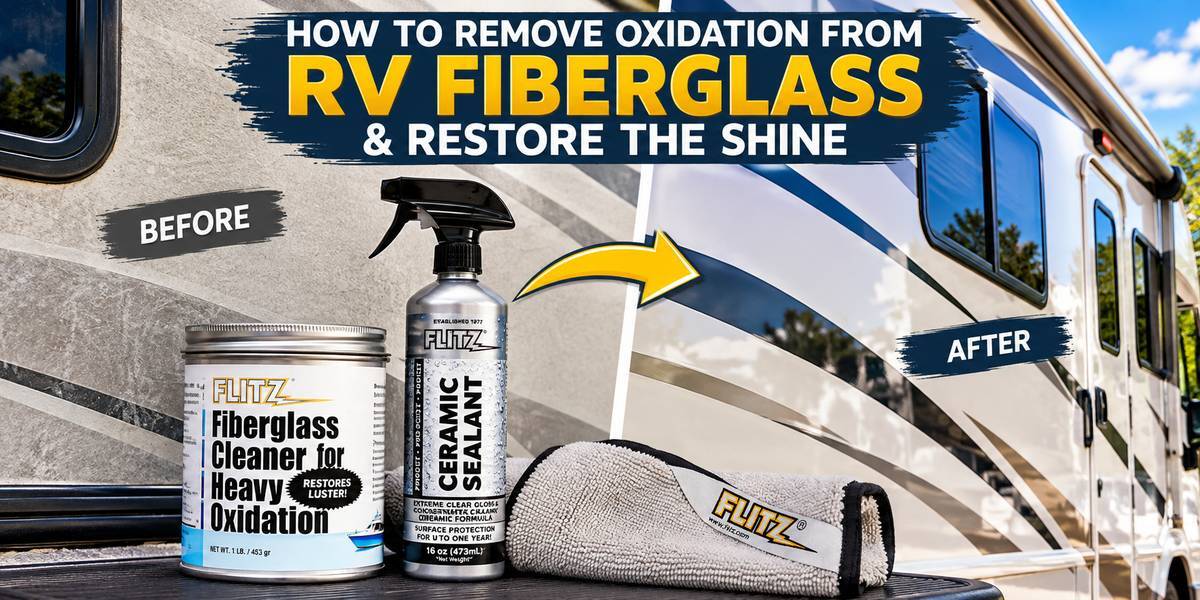
A fiberglass RV can spend years exposed to sunlight, rain, road grime and changing weather. Over time, that exposure can leave the exterior looking faded, dull or covered with a chalky film—even after the RV has been washed.
If you’re wondering how to remove oxidation from RV fiberglass, ordinary washing usually isn’t enough. The weathered material needs to be removed from the surface before the original color and shine can come back.
The good news is that many oxidized fiberglass RV surfaces can be dramatically improved with the right cleaner, polishing technique and a little patience.
What Does Oxidation Look Like on RV Fiberglass?
Oxidation develops gradually as fiberglass and gelcoat are exposed to sunlight and weather.
Common signs include:
-
A chalky or powdery film
-
Faded color
-
A dull or flat appearance
-
Loss of gloss
-
White residue that comes off on your hand or cloth
-
Areas that still look cloudy after washing
-
Uneven shine between protected and exposed sections
One simple test is to run a clean hand or microfiber cloth across a dull section of the RV. If a chalky residue comes away from the surface, oxidation may be contributing to the faded appearance.
Why Does RV Fiberglass Lose Its Shine?
Many fiberglass RV exteriors use a gelcoat surface. That outer finish helps provide the smooth, glossy appearance you see when the RV is new.
Sunlight, weather and environmental exposure gradually affect the surface. As oxidation develops, the finish becomes increasingly dull and chalky.
Waxing an already heavily oxidized surface may temporarily make it look better, but covering oxidation does not remove the weathered material underneath.
For the best restoration, clean away the oxidation first and then protect the renewed surface.
What You'll Need to Restore Oxidized RV Fiberglass
Before starting, gather a few basic supplies:
-
RV wash supplies
-
Clean water
-
Flitz Fiberglass Cleaner for Heavy Oxidation
-
A soft applicator if desired
-
A fiberglass-compatible protectant for the final step
Start with clean materials. Dirt or grit trapped in a cloth can be dragged across the finish while you work.
Step 1: Wash the RV Fiberglass First
Do not begin polishing a dirty RV.
Wash the fiberglass exterior thoroughly to remove:
-
Dirt
-
Road grime
-
Mud
-
Bugs
-
Loose debris
-
Surface contaminants
Rinse thoroughly and allow the fiberglass to dry.
Starting with a clean, dry surface allows you to work on the oxidation itself instead of rubbing dirt into the finish.
Step 2: Test a Small Area
Before treating a large RV panel, test your cleaning and polishing process in a small, less noticeable area.
This helps you evaluate the condition of the fiberglass and see how much improvement is possible before working across the entire RV.
It is especially useful on older RVs or surfaces with unknown previous treatments.
Always follow the RV manufacturer's care recommendations and the directions for the product you are using.
Step 3: Work in Small Sections
Trying to restore an entire RV side at once can make the process harder than it needs to be.
Instead, divide the surface into manageable sections.
Apply Flitz Fiberglass Cleaner for Heavy Oxidation to a small working area with a clean microfiber cloth or appropriate applicator.
Working section by section helps you:
-
Keep the product under control
-
Monitor your progress
-
Buff the area before moving on
-
Compare restored areas with oxidized sections
-
Give stubborn areas additional attention
Step 4: Work the Oxidation From the Surface
Work the Fiberglass Cleaner across the oxidized section according to the product directions.
As you work, the chalky oxidation should begin lifting from the surface and the underlying color and gloss should become more visible.
Rotate your microfiber cloth frequently as it becomes loaded with removed oxidation.
A dirty cloth can simply move residue around instead of removing it cleanly.
Step 5: Buff the Fiberglass
Once the oxidation has been worked from the section, buff the surface with a clean microfiber cloth.
Use a fresh portion of the towel as needed.
The goal is a smooth, clean finish without leftover residue or haze.
Then move to the next section and repeat the process.
What About Heavy Oxidation on RV Fiberglass?
Heavy oxidation does not develop overnight, and badly weathered fiberglass may not be restored in one pass.
If the first application produces noticeable improvement but the surface still looks faded or chalky, repeat the process according to the product directions.
Several controlled passes are preferable to rushing the job.
Pay particular attention to areas that receive the most sun exposure, such as:
-
Front caps
-
Rear caps
-
Upper sidewalls
-
Areas above awnings
-
Sections that receive little shade
Oxidation may vary significantly across the same RV.
Light Oxidation vs. Heavy Oxidation
Not every faded RV requires the same level of restoration.
Light Oxidation
Light oxidation may appear as:
-
Slight dullness
-
Mild fading
-
Reduced gloss
-
A small amount of chalky residue
A fiberglass-compatible polish may be enough to improve these surfaces.
Heavy Oxidation
Heavy oxidation is more likely to produce:
-
Obvious chalking
-
Significant fading
-
Flat or powdery-looking fiberglass
-
Color that appears washed out
-
Little improvement after ordinary washing
Flitz Fiberglass Cleaner for Heavy Oxidation is specifically intended for weathered fiberglass where oxidation and buildup need to be removed before the finish can regain its appearance.
How to Restore Shine to RV Fiberglass
Removing oxidation is the most important part of restoring a faded fiberglass surface.
Once the oxidized layer is gone, polishing brings out the underlying color and gloss.
Flitz Fiberglass Cleaner performs both cleaning and polishing during the oxidation-removal process, so you should already see the finish improve as you work.
The amount of shine that can be restored will depend on the age and condition of the RV's surface.
Extremely weathered fiberglass or damaged gelcoat may require professional evaluation or repair rather than continued polishing.
Don't Put Wax Over Heavy Oxidation
It can be tempting to apply wax as soon as an RV begins looking dull.
Wax can help protect fiberglass that is already in good condition, but it does not remove a heavily oxidized layer.
If chalking and oxidation are present, clean and restore the surface first.
Think of the process in this order:
-
Wash
-
Remove oxidation
-
Polish
-
Protect
That order gives the protectant a properly prepared surface to work on.
Protect the Fiberglass After Removing Oxidation
Once the RV fiberglass has been cleaned and the oxidation removed, add protection rather than leaving the restored surface exposed.
Flitz Ceramic Sealant can be applied after the restoration process to help protect the finished surface from environmental exposure and make future maintenance easier.
Follow the sealant directions carefully and make sure the fiberglass is properly prepared before application.
Protection is particularly important for an RV that spends much of the year outdoors.
How to Prevent RV Fiberglass From Oxidizing Again
You may not be able to eliminate weather exposure completely, but regular maintenance can slow down the return of heavy oxidation.
Helpful habits include:
-
Wash the RV regularly
-
Remove bugs and road grime before they remain on the surface for long periods
-
Keep fiberglass clean before storing the RV
-
Maintain an appropriate protective coating
-
Inspect the finish for early signs of chalking
-
Address fading before oxidation becomes severe
-
Store the RV under cover when practical
Catching oxidation early generally makes maintenance easier than waiting until the entire exterior has become heavily chalked.
Can You Restore Severely Oxidized RV Fiberglass?
Many faded fiberglass surfaces can be improved, but there is a limit to what polishing can accomplish.
If the gelcoat itself has severely deteriorated, cracked, become extremely thin or suffered other physical damage, cleaning and polishing may not completely restore the surface.
If you are unsure whether you are dealing with oxidation or actual finish damage, test a small area first.
When a test section responds well and the color and shine return, you can continue working across the RV in manageable sections.
If there is little improvement or the surface appears physically damaged, professional fiberglass or RV repair may be the better option.
How Long Does It Take to Remove Oxidation From an RV?
That depends heavily on:
-
The size of the RV
-
How much fiberglass is exposed
-
The severity of the oxidation
-
How long the surface has been weathered
-
Whether multiple passes are required
A lightly oxidized section may improve quickly, while an older RV with years of weathering will require considerably more work.
Rather than trying to finish the entire RV as quickly as possible, focus on completing one section correctly before moving to the next.
Should You Polish RV Fiberglass by Hand or With a Machine?
Small areas can be restored by hand using clean microfiber cloths or suitable applicators.
Larger RV surfaces may take considerably longer by hand.
If you use powered polishing equipment, follow the equipment manufacturer's instructions and make sure the pad, speed and technique are appropriate for the RV finish.
When you are unfamiliar with the surface or equipment, begin conservatively and test a small area first.
Don't Forget the Small Details
While restoring your RV, look beyond the large fiberglass panels.
Oxidation, water staining and weather exposure may also affect:
-
Trim
-
Metal hardware
-
Handles
-
Exterior fixtures
-
Painted surfaces
-
Areas around lights
-
Sections near the roofline
Use products appropriate for each individual surface rather than assuming everything on the RV should be cleaned or polished the same way.
Bring Back the Shine to Your RV Fiberglass
Learning how to remove oxidation from RV fiberglass starts with recognizing that chalky, faded fiberglass needs more than an ordinary wash.
Clean the RV first, work in small sections, remove the oxidized material and buff the fiberglass until the underlying color and gloss return. Heavily weathered areas may require another pass, while severely damaged surfaces may need professional attention.
Flitz Fiberglass Cleaner for Heavy Oxidation is designed to clean and polish weathered fiberglass and gelcoat on RVs, helping remove the dull, chalky oxidation that makes an exterior look old and faded.
Once the surface is restored, add appropriate protection and maintain it regularly so the fiberglass stays brighter for longer.