
How to Remove Hard Water Stains From a Stainless Steel Sink
Posted by Flitz Premium Polishing Products on 22nd Oct 2026
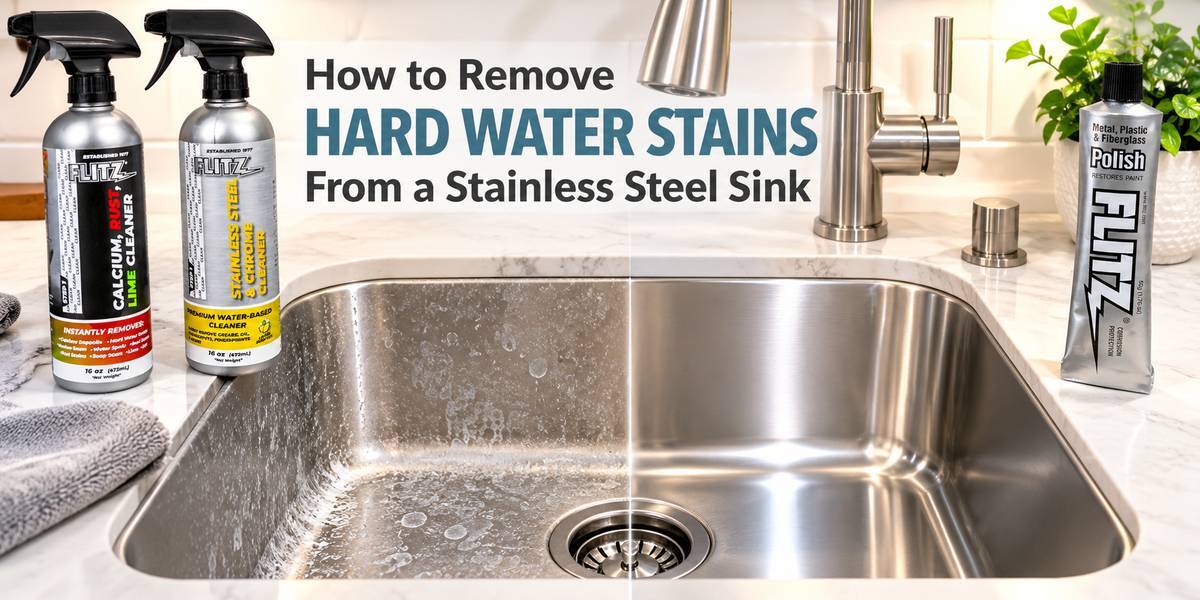
Hard water can leave a stainless steel sink covered in cloudy spots, white mineral deposits and dull-looking stains that ordinary wiping doesn’t always remove. Even a freshly cleaned sink can look dirty when calcium and mineral buildup is left behind.
If you’re wondering how to remove hard water stains from a stainless steel sink, the right approach depends on whether you’re dealing with everyday water spots or heavier mineral buildup. Cleaning the deposits first—and then polishing and protecting the surface—can help bring back the clean, bright appearance of stainless steel.
Why Does Hard Water Stain a Stainless Steel Sink?
Hard water contains dissolved minerals. When water droplets are left to dry on your sink, the water evaporates but some of those minerals remain behind.
Over time, repeated splashing and drying can create:
-
White or cloudy water spots
-
Calcium and lime buildup
-
Dull-looking areas
-
Rings around faucets and drains
-
Mineral deposits along the sides of the sink
-
Streaking that remains after normal cleaning
Stainless steel resists many types of staining, but it still needs regular cleaning—especially in homes with hard water.
Start With Everyday Stainless Steel Sink Cleaning
Before tackling stubborn mineral buildup, remove grease, food residue, fingerprints and ordinary surface grime.
Flitz Stainless Steel & Chrome Cleaner is designed for stainless steel surfaces, including kitchen and bathroom sinks. Spray the cleaner onto the surface and wipe with a clean microfiber cloth, working in the direction of the stainless steel grain when visible.
This first cleaning step makes it easier to see which marks are ordinary grime and which areas still have hard water or mineral deposits.
Pay extra attention around the faucet base, drain and edges of the sink, where water tends to collect and dry.
How to Remove Hard Water Stains From a Stainless Steel Sink
For stubborn hard water stains, calcium or lime buildup, you may need a cleaner specifically designed to break down mineral deposits.
Flitz Calcium, Rust & Lime Remover can be used on stainless steel and is designed to remove hard water spots, calcium deposits, lime buildup and other mineral staining.
For a stainless steel sink:
-
Remove loose debris and clean away grease or food residue first.
-
Test the product in a small, inconspicuous area before treating the entire sink.
-
Spray the Calcium, Rust & Lime Remover onto the affected area.
-
Agitate the buildup if needed according to the product directions.
-
Do not allow the product to remain on the surface for more than one minute.
-
Rinse the treated area thoroughly with water.
-
Dry the sink with a clean microfiber cloth.
Always follow the directions on the product label and rinse the sink thoroughly after cleaning.
For heavier buildup, it is better to repeat the process as directed rather than allowing the cleaner to sit longer than recommended.
Don't Forget the Faucet and Drain Area
Some of the worst hard water buildup often appears around the faucet rather than in the center of the sink.
Water repeatedly collects around:
-
Faucet bases
-
Handles
-
Sprayer attachments
-
Drain flanges
-
Sink edges
-
Seams and corners
These areas can develop chalky white deposits or visible water rings.
Work carefully around hardware and always check the manufacturer’s care instructions for the faucet or fixture finish before applying a cleaner. Not every decorative finish should be treated the same way as stainless steel.
How to Clean a Stainless Steel Sink Without Leaving Streaks
Once the hard water deposits are gone, you may still notice streaks or fingerprints.
A few simple habits can help:
-
Clean in the direction of the stainless steel grain.
-
Use a clean microfiber cloth.
-
Avoid using an excessive amount of cleaner.
-
Use a fresh section of the cloth as residue is removed.
-
Dry the sink rather than allowing water droplets to evaporate on the surface.
Drying is especially helpful in hard-water areas because it prevents another layer of minerals from being left behind every time the sink gets wet.
How to Make a Stainless Steel Sink Shine Again
Removing stains and mineral buildup is only part of restoring the appearance of a stainless steel sink.
Once the sink is completely clean, you can evaluate whether it needs additional polishing or protection.
For stainless steel that has become dull or discolored, Flitz Paste Metal Polish can be used on stainless steel and household sinks to help remove water staining, discoloration and oxidation while restoring shine.
Use only a small amount, follow the product directions and work with the grain of the stainless steel when applicable.
After polishing, buff the surface with a clean microfiber cloth.
Clean, Polish and Protect: What's the Difference?
These three steps perform different jobs.
Cleaning removes grease, fingerprints, food residue and everyday surface grime.
Polishing helps address dullness, discoloration and staining while improving the appearance of the metal.
Protecting adds a finishing layer after the surface is already clean.
Flitz Stainless Steel Polish & Protectant is designed as a protectant rather than a cleaner. Once your stainless steel sink is clean, it can be applied according to its directions to help keep the surface looking polished and make ongoing maintenance easier.
You do not necessarily need all three steps every time you clean your sink. Routine cleaning may be all that is needed most days. Deeper mineral removal, polishing and protection can be done when the condition of the sink calls for it.
What Should You Avoid When Cleaning a Stainless Steel Sink?
Stainless steel is durable, but poor cleaning habits can still leave scratches or damage the appearance of the finish.
Avoid:
-
Scrubbing randomly across the grain
-
Using dirty pads or cloths that may contain abrasive debris
-
Allowing mineral-removal products to dry on the surface
-
Leaving cleaners on longer than their directions recommend
-
Mixing cleaning chemicals
-
Using a product without checking that it is appropriate for the sink or fixture finish
If you are unsure about the finish of your sink, test the product in a hidden area first and check the sink manufacturer’s care recommendations.
How to Prevent Hard Water Stains on a Stainless Steel Sink
The easiest hard water stain to remove is the one that never has time to build up.
You can reduce mineral deposits by:
-
Wiping standing water from the sink after use
-
Drying around the faucet and drain
-
Cleaning water spots before layers accumulate
-
Keeping a microfiber cloth nearby for quick drying
-
Performing regular cleaning rather than waiting for heavy buildup
-
Applying an appropriate stainless steel protectant after cleaning when desired
If your home has particularly hard water, routine drying can make a noticeable difference because minerals are removed with the water instead of being left behind when droplets evaporate.
How Often Should You Clean a Stainless Steel Sink?
There is no single schedule that works for every kitchen.
A heavily used kitchen sink may need light cleaning every day, while a less frequently used sink may need attention only a few times each week.
The important part is not allowing grease, food residue and hard water deposits to accumulate for long periods.
If you notice cloudy spots beginning to appear, address them early. Fresh water spots are generally easier to manage than layers of mineral buildup that have repeatedly dried onto the surface.
What If the Stainless Steel Sink Still Looks Dull After Cleaning?
If you've removed the grease, grime and mineral deposits but the stainless steel still looks dull, the problem may be discoloration or a loss of polish rather than dirt.
At that point, a stainless-steel-compatible metal polish may help restore the appearance.
Flitz Paste Metal Polish can be used on stainless steel sinks for this deeper polishing step. Afterward, a protectant can be applied if desired to help maintain the freshly cleaned and polished surface.
Always distinguish between cleaning and polishing. Adding more cleaner will not necessarily restore a surface that is already clean but has become dull.
Keep Hard Water From Taking Over Your Sink
Learning how to remove hard water stains from a stainless steel sink is mostly about using the right product for the type of buildup you are seeing.
Start by removing everyday grime with a stainless steel cleaner. If calcium, lime or hard water deposits remain, treat those mineral stains separately. Once the sink is clean, polish dull areas if needed and consider adding protection to make ongoing maintenance easier.
A little regular drying and cleaning can also prevent small water spots from turning into stubborn mineral deposits—keeping your stainless steel sink looking clean, bright and ready for the next round of dishes.