
How to Clean Chrome Wheels: Remove Brake Dust, Oxidation & Grime
Posted by Flitz Premium Polishing Products on 4th Nov 2026
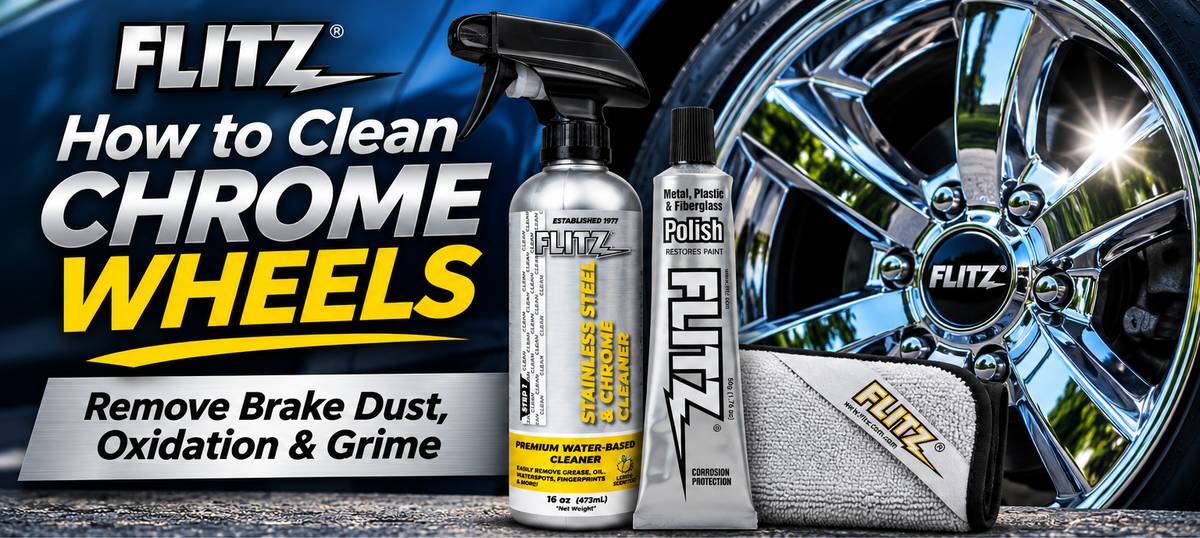
Chrome wheels can give a vehicle a bright, mirror-like finish, but they also make brake dust, road grime, water spots and oxidation easy to notice.
If you're wondering how to clean chrome wheels without leaving them dull or hazy, the best approach is to separate the job into three stages: clean away surface contamination, polish the chrome when needed, and protect the finished surface afterward.
Regular maintenance can also prevent brake dust and grime from becoming much harder to remove later.
Why Do Chrome Wheels Get So Dirty?
Wheels operate in one of the harshest areas of a vehicle.
Every time you drive, they can be exposed to:
-
Brake dust
-
Road grime
-
Dirt and mud
-
Water spots
-
Road salt
-
Grease and automotive residue
-
Bugs and other contaminants
Brake dust is especially noticeable on bright chrome because the dark residue contrasts sharply with the reflective finish.
If dirt and residue remain on the wheel for long periods, the chrome may also begin to look dull or cloudy.
Make Sure Your Wheels Are Actually Chrome
Before using any cleaner or polish, confirm what type of wheel finish you have.
A wheel that looks shiny may be:
-
Chrome plated
-
Polished aluminum
-
Clear-coated aluminum
-
Painted
-
Powder coated
-
Another plated or decorative finish
These surfaces do not always require the same cleaning or polishing method.
Check the wheel manufacturer's care recommendations when you're unsure. Testing a product on a small, inconspicuous area before treating the entire wheel is also a good practice.
Start With Cool Wheels
Never begin a detailed cleaning process immediately after hard driving when the wheels and brakes are still hot.
Park the vehicle in a shaded area when practical and allow the wheels to cool.
Working on a cool surface gives you more control over cleaners and prevents products from drying too quickly.
Step 1: Rinse Away Loose Dirt
Start by rinsing the wheel to remove loose dirt, sand and road debris.
This first step is important because dragging gritty contamination across a chrome surface can create unnecessary marks.
Pay attention to:
-
Wheel faces
-
Spokes
-
Lug nut areas
-
Inner edges
-
Areas around the valve stem
Removing loose contamination first makes the actual cleaning step easier.
Step 2: Clean Brake Dust and Road Grime
Once the loose debris is gone, clean the chrome surface.
Flitz Stainless Steel & Chrome Cleaner can be used on chrome to remove everyday buildup such as fingerprints, oils, grease, water spots and surface grime.
Apply the cleaner according to the product directions and wipe the wheel with a clean microfiber cloth.
For tight areas around spokes, lug nuts and wheel openings, use a suitable soft detailing tool that will not damage the finish.
Do not allow dirt to accumulate heavily on your cleaning cloth. Rotate or replace the cloth as it becomes soiled.
How to Remove Brake Dust From Chrome Wheels
Brake dust can range from a light gray coating to dark buildup that collects in corners and around spokes.
For fresh brake dust:
-
Allow the wheel to cool.
-
Rinse away loose debris.
-
Apply an appropriate chrome-safe cleaner.
-
Work gently around the wheel face and tight areas.
-
Wipe or rinse away loosened residue according to the cleaner directions.
-
Dry the wheel completely with a clean microfiber cloth.
If brake dust has remained on the wheel for an extended period, you may need to repeat the cleaning process rather than scrub aggressively.
Using more force is not always the answer. The goal is to loosen and remove contamination without damaging the chrome finish.
Step 3: Dry the Wheels Completely
After cleaning, dry the chrome rather than allowing water to evaporate naturally.
Water droplets can leave mineral spots behind, particularly in areas with hard water.
Use a clean microfiber cloth and pay attention to areas where water tends to collect, such as around lug nuts, spokes and recessed sections.
Once the wheel is clean and dry, you can clearly see whether it simply needed cleaning or whether the chrome also needs polishing.
How to Clean Oxidized Chrome Rims
If a clean chrome wheel still appears cloudy, faded or dull, oxidation or surface deterioration may be affecting the finish.
Cleaning removes dirt and contamination. Polishing addresses the condition of the chrome itself.
For a deeper breakdown of polishing technique, see our guide on how to polish chrome.
Flitz Paste Metal Polish or Flitz Liquid Metal Polish can be used on compatible chrome surfaces to help remove oxidation, discoloration and dullness and restore shine.
Apply a small amount according to the product directions and work on one manageable section at a time.
After polishing, buff away residue with a clean microfiber cloth.
For larger wheel surfaces, a Flitz BuffBall can make the polishing process faster when used according to its instructions.
Clean First, Polish Second
One of the most important steps in chrome wheel care is not polishing a dirty wheel.
Think of the process this way:
Cleaning removes brake dust, road grime, grease and other surface contamination.
Polishing addresses oxidation, dullness, staining and loss of shine.
Protecting helps maintain the clean, polished surface afterward.
If you want a more complete wheel-care setup, the Flitz Automotive Wheel Detail Kit brings together products and tools for cleaning, polishing and maintaining wheels.
A wheel does not necessarily need to be polished every time it is washed.
If the chrome looks bright after cleaning and drying, routine cleaning may be all that is necessary.
What About Pitted Chrome Wheels?
Pitting is different from ordinary dirt or oxidation.
Chrome pitting occurs when corrosion or deterioration has physically damaged the plated surface. Small pits may look like dark dots, rough spots or tiny craters in the chrome.
Cleaning can remove contamination from around these areas, and polishing may improve the appearance of surrounding chrome, but polish cannot replace chrome plating that is physically missing.
This distinction is important when trying to clean pitted chrome wheels.
If the chrome is severely pitted, peeling, flaking or damaged, professional wheel refinishing or replacement may be necessary.
Do not continue aggressive polishing in an attempt to remove damage that extends through the chrome plating.
How to Clean Chrome Rims That Are Pitted
If the wheel has minor pitting but the surrounding chrome is still intact:
-
Clean the wheel thoroughly.
-
Dry it completely.
-
Inspect the pitted areas closely.
-
Polish only intact chrome according to the polish directions.
-
Buff with a clean microfiber cloth.
-
Protect the finished wheel afterward.
The goal is to improve the condition of the surrounding chrome and prevent additional contamination from accumulating—not to claim that polishing can repair missing plating.
Protect Chrome Wheels After Cleaning and Polishing
Once the chrome is clean and polished, adding protection can help make future maintenance easier.
Flitz Ceramic Sealant can be applied to compatible wheel finishes according to its directions. It is designed to help protect surfaces from environmental exposure, oxidation and brake dust.
Protection is particularly useful for wheels because they are constantly exposed to contamination whenever the vehicle is driven.
Apply the sealant only after the wheel has been thoroughly cleaned and any needed polishing is complete.
How Often Should You Clean Chrome Wheels?
There is no single schedule that works for every vehicle.
How often you need to clean your wheels depends on:
-
How frequently you drive
-
Brake pad type
-
Weather
-
Road conditions
-
Exposure to road salt
-
Whether the vehicle is stored indoors or outside
-
How quickly brake dust accumulates
A vehicle driven every day may need wheel cleaning much more often than a weekend or show car.
The important thing is to avoid allowing heavy layers of brake dust and road grime to remain on the chrome for long periods.
Winter Chrome Wheel Care
Late fall and winter can be especially hard on wheels.
Depending on where you drive, chrome wheels may be exposed to:
-
Road salt
-
Slush
-
Snow
-
Sand
-
Deicing chemicals
-
Additional road grime
During winter, rinse away road contamination regularly rather than allowing it to remain on the wheel.
If the vehicle will be stored for the season, clean, dry, polish if needed and protect the chrome before storage.
Can You Use a BuffBall on Chrome Wheels?
A Flitz BuffBall can be useful when polishing larger chrome wheel surfaces and getting into curved areas that are difficult to polish efficiently by hand.
Use the BuffBall with an appropriate Flitz polish and follow the product and tool directions.
The BuffBall should be used for the polishing stage after the wheel has already been cleaned.
Do not use a polishing tool as a substitute for removing gritty dirt and brake dust first.
Common Chrome Wheel Cleaning Mistakes
A few mistakes can make wheel care harder than it needs to be.
Avoid:
-
Cleaning wheels while they are extremely hot
-
Polishing over dirt or brake dust
-
Using dirty cloths
-
Allowing road salt to remain on wheels for extended periods
-
Assuming every shiny wheel is chrome
-
Using a product without checking finish compatibility
-
Trying to polish away deep pitting or missing chrome plating
-
Skipping protection after a full restoration
Good chrome-wheel care is usually less about aggressive scrubbing and more about using the correct step for the problem you're trying to solve.
Keep Chrome Wheels Clean, Polished and Protected
Learning how to clean chrome wheels starts with understanding what you're seeing on the surface.
Brake dust and road grime need cleaning. Cloudy or oxidized chrome may need polishing. Pitting is physical damage and should not be mistaken for ordinary contamination.
Start with cool wheels, rinse away loose dirt, clean the surface thoroughly and dry it completely. If the chrome still looks dull, polish compatible surfaces and buff them to restore the shine.
Flitz Stainless Steel & Chrome Cleaner, Flitz Metal Polish, the Flitz BuffBall and Flitz Ceramic Sealant can each play a different role in a complete wheel-care routine—cleaning, polishing and protecting the chrome so it continues to look its best.