
How to Remove Scratches from Aluminum, Metal & More
Posted by Flitz Premium Polishing Products on 1st Nov 2022
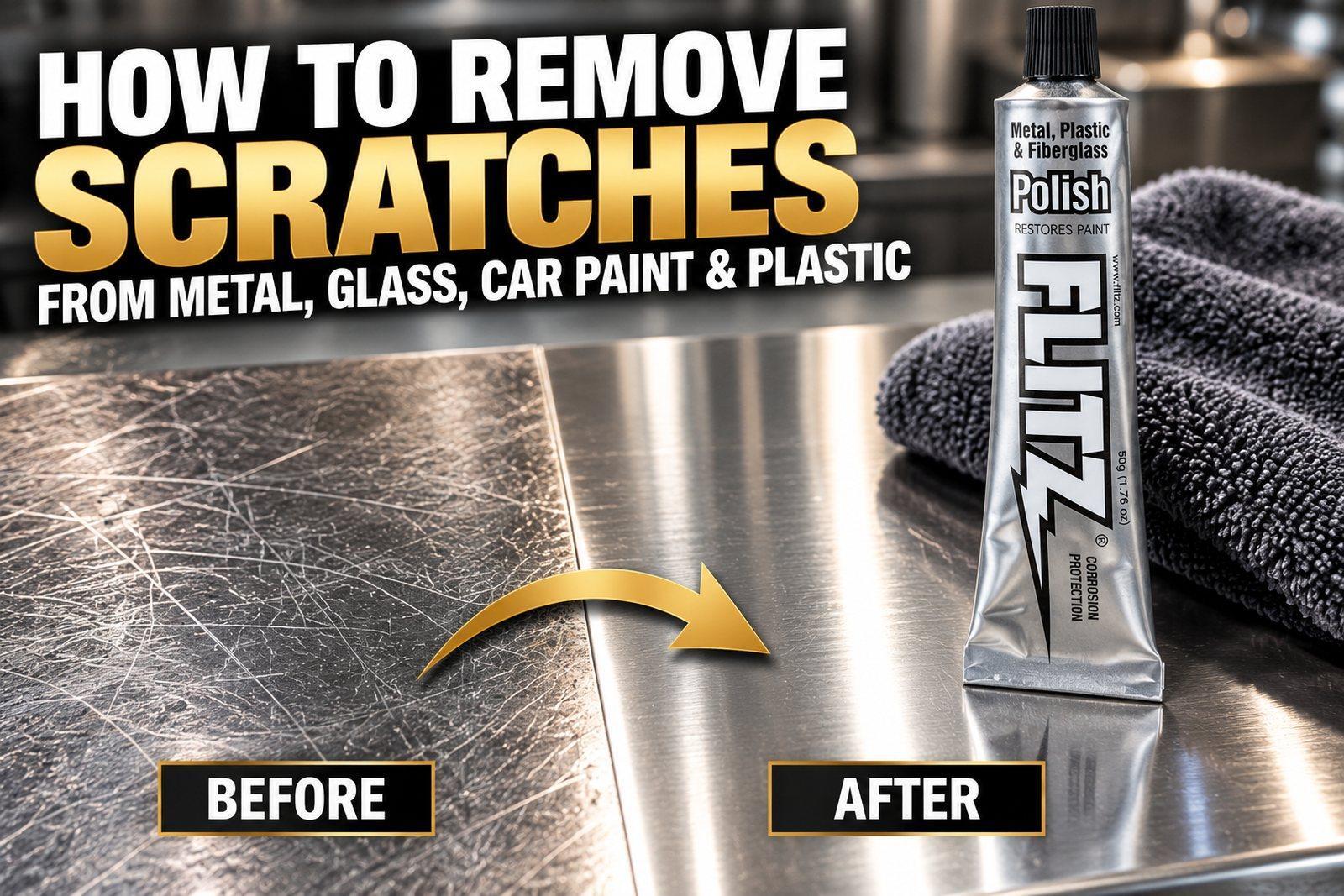
Scratches on aluminum and metal can be frustrating, especially when they affect a polished finish. Fortunately, some light surface scratches can be improved with careful cleaning and polishing. Deeper scratches, damaged coatings, and certain specialty finishes require a different approach.
If you're wondering how to remove scratches from aluminum, the first step is to identify the material, its finish, and the depth of the damage.
This guide explains how to assess scratches on aluminum, stainless steel, glass, plastic, acrylic, and car paint—and when Flitz polishing products may help restore their appearance.
Can Metal Polish Remove Scratches?
Yes, polishing can sometimes reduce the appearance of light surface scratches, scuffs, and swirl marks on compatible materials. However, not every scratch can be removed with metal polish.
A scratch is physical damage to a surface. Depending on its depth, polishing may smooth the surrounding finish or make the mark less noticeable.
Before attempting scratch removal, distinguish between three situations:
-
Light surface scratches and scuffs: Fine marks that may improve with appropriate polishing.
-
Deeper scratches and gouges: Damage that may require specialized refinishing or professional repair.
-
Damaged coatings or finishes: Scratches through clear coat, anodizing, paint, or another protective layer that cannot necessarily be corrected by polishing the underlying material.
A useful initial check is whether the scratch catches your fingernail. If it does, the damage may be too deep for ordinary polishing alone.
Always identify the surface before choosing a scratch-removal method.
How to Remove Scratches from Aluminum
Aluminum is used in wheels, automotive trim, appliances, marine hardware, and decorative metalwork. Although it's lightweight and versatile, aluminum can develop scratches, scuffs, oxidation, and swirl marks.
The best method for removing scratches from aluminum depends on whether the surface is bare, clear-coated, anodized, or brushed.
Step 1: Identify the Aluminum Finish
Before applying metal polish, determine what type of aluminum you're working with.
Bare or uncoated aluminum
Bare aluminum can often be cleaned and polished to restore shine. Light scratches and surface marks may improve through careful polishing.
Clear-coated aluminum
Many automotive wheels and other aluminum parts have a protective clear coat. A scratch may be located in that coating rather than the aluminum underneath.
Avoid sanding or polishing through an intact clear coat. Damaged coatings may require specialized refinishing.
Anodized aluminum
Anodizing creates a protective surface layer. Abrasive refinishing or aggressive polishing can permanently alter the appearance of anodized aluminum.
Follow the manufacturer's care recommendations rather than treating anodized aluminum like bare metal.
Brushed or satin aluminum
Brushed aluminum has a directional texture. Polishing can change that texture or produce an uneven glossy spot.
Repairing scratches while preserving the original finish may require specialized techniques.
Step 2: Clean the Surface
Before attempting to polish scratched aluminum:
-
Remove loose dust, grit, and debris.
-
Clean the surface with a product suitable for its finish.
-
Dry thoroughly using a clean, soft cloth.
-
Examine the scratch in good lighting.
Cleaning first prevents loose particles from causing additional marks while polishing.
Step 3: Test a Small Area
For suitable bare aluminum, test the polishing method in an inconspicuous location.
Start with a soft cloth and gentle pressure. Check whether the polish changes the finish or improves the appearance of the scratch.
If the surface becomes uneven or the finish changes unexpectedly, stop.
Step 4: Polish Compatible Bare Aluminum
For light surface marks on suitable uncoated aluminum, Flitz Paste Metal Polish can help restore the polished appearance while removing oxidation and discoloration.
To polish:
-
Apply a small amount of polish to a clean microfiber cloth.
-
Work gently over a small section of bare aluminum.
-
Buff away the residue before the polish dries.
-
Inspect the finish and repeat only if appropriate.
A Flitz Microfiber Polishing Cloth is useful for controlled application and final buffing.
Polishing may improve the appearance of shallow scratches, but it cannot guarantee complete removal of physical damage.
Step 5: Evaluate the Results
After polishing, examine the surface in good lighting.
If the mark was primarily oxidation, a light scuff, or a superficial surface imperfection, you may notice an improvement.
If a visible groove remains, further polishing may not be the appropriate solution.
For deep gouges, curb rash, damaged coatings, or structural damage, consult a qualified refinishing professional.
For more detailed instructions, see our step-by-step guide to polishing cast aluminum.
Working on wheels? Our guide to polishing aluminum wheels and rims explains how to identify different wheel finishes before restoration.
Scratched Aluminum: What Should You Avoid?
Several common mistakes can make aluminum scratches worse.
Avoid these approaches unless the material and repair method have been properly verified:
-
Sanding clear-coated or anodized aluminum without an appropriate refinishing procedure.
-
Using aggressive polishing tools on delicate or coated finishes.
-
Attempting to polish deep gouges away through excessive pressure.
-
Treating brushed aluminum like mirror-polished aluminum.
-
Assuming every aluminum wheel or decorative part has the same finish.
The goal is to improve the appearance without damaging the surrounding surface.
How to Remove Scratches from Stainless Steel
Stainless steel is common in kitchen sinks, appliances, automotive parts, and household fixtures.
However, stainless steel surfaces can have very different finishes, including polished, brushed, coated, and specialty finishes.
Light Scratches on Polished Stainless Steel
On compatible uncoated stainless steel, careful polishing may help reduce the appearance of light surface scratches or swirl marks.
Start by cleaning the surface and testing a small area.
For suitable polished stainless steel, Flitz Paste Metal Polish may help restore shine and reduce the appearance of minor surface marks.
Scratches on Brushed Stainless Steel
Brushed stainless steel has a directional grain that can be difficult to restore.
Polishing across the grain or using an unsuitable product can leave a noticeable shiny patch.
Follow the appliance or fixture manufacturer's guidance, particularly on fingerprint-resistant or coated finishes.
Deep scratches may require professional refinishing.
Cleaning Isn't the Same as Scratch Removal
A stainless steel cleaner removes grease, fingerprints, and surface grime, but it doesn't necessarily remove scratches.
For routine maintenance, consider Flitz Stainless Steel & Chrome Cleaner.
For compatible stainless steel surfaces requiring polishing and protection, explore Flitz Stainless Steel Polish & Protectant.
Choose the product based on the finish and whether the goal is cleaning, polishing, or protection.
How to Remove Light Scratches from Glass
Glass can develop surface marks from cleaning tools, grit, or everyday use.
Some very light marks on compatible glass may be improved through careful polishing, but deeper scratches often require specialized equipment or professional repair.
Before trying any glass-polishing method:
-
Determine whether the glass has a protective or specialty coating.
-
Check the glass manufacturer's recommendations.
-
Avoid abrasive or aggressive treatment of unknown finishes.
-
Test only where the polishing method is approved.
Important: Automotive windshields, eyeglass lenses, coated displays, and other optical surfaces require special caution. Improper polishing can damage coatings or introduce visual distortion.
For deep glass scratches or safety-critical glass, consult a qualified professional.
How to Remove Scratches from Plastic and Acrylic
Plastic and acrylic can develop fine scratches, haze, and surface wear.
The appropriate method depends on the plastic type and whether it has a protective coating.
For compatible uncoated plastic and acrylic surfaces, careful polishing may improve light surface marks and restore clarity.
Flitz Paste Metal Polish is designed for a range of compatible materials, including certain plastics and acrylics.
Before polishing:
-
Confirm the material and coating.
-
Clean away dirt and grit.
-
Test a small, inconspicuous area.
-
Use gentle pressure and a suitable soft cloth.
-
Inspect the results before continuing.
Avoid assuming that a method suitable for acrylic will also be safe for polycarbonate, coated plastic, or electronic displays.
Deep scratches and damaged protective coatings may require specialized repair or replacement.
How to Remove Scratches from Car Paint
Scratches in automotive paint vary considerably in depth.
Modern vehicle finishes commonly include multiple layers, including color and a protective clear coat.
Light Clear-Coat Scratches and Swirl Marks
Light marks confined to the clear coat may sometimes be improved through appropriate paint correction.
A professional detailer can assess whether polishing or another paint-correction method is suitable.
Deep Scratches Through the Paint
If a scratch extends through the clear coat into the color layer or primer, ordinary polishing is unlikely to restore the original finish.
These scratches may require touch-up paint or professional refinishing.
Does Ceramic Sealant Remove Scratches?
No. A ceramic sealant is a protective product, not a substitute for repairing physical damage.
After a suitable surface has been cleaned or professionally corrected, Flitz Ceramic Sealant can provide additional protection when used according to its instructions.
It should not be presented as a repair for deep scratches, missing paint, or damaged clear coat.
Which Flitz Polish Should You Use?
Choosing the right polishing product depends on the material and size of the project.
Flitz Paste Metal Polish
A concentrated formula useful for controlled polishing, removing oxidation, and restoring shine to compatible metals and other approved surfaces.
Flitz Liquid Metal Polish
An easy-to-spread formula suited to larger polishing projects and routine maintenance of compatible materials.
Shop Flitz Liquid Metal Polish
For a detailed comparison, read our Flitz Liquid vs. Paste Polish guide.
You can also browse the full selection of Flitz metal polishes and polishing products.
Remember that polishing products can help improve certain surface imperfections, but no single product is appropriate for every scratch or finish.
Frequently Asked Questions About Scratch Removal
Can you remove scratches from aluminum?
Light scratches on suitable bare aluminum may be improved with careful polishing. Deeper scratches, damaged clear coats, and anodized finishes may require specialized repair.
How do you get scratches out of aluminum without damaging the finish?
Identify the finish first. Clean the surface, test in an inconspicuous area, and use a polishing method appropriate for the material. Avoid aggressive sanding or polishing on coated and anodized aluminum.
Does polishing remove scratches?
Polishing can sometimes reduce the appearance of light scratches by improving the surrounding surface. It cannot reliably remove deep gouges, repair missing coatings, or restore every type of damage.
Does Flitz Metal Polish remove scratches?
Flitz Metal Polish may improve the appearance of certain light surface marks on compatible materials. Results depend on scratch depth, surface type, coating, and application.
It is not intended to replace professional repair for deep scratches or damaged finishes.
Can you polish scratches out of stainless steel?
Some light marks on compatible polished stainless steel may improve with careful polishing. Brushed, coated, or specialty stainless steel finishes require additional care.
What if a scratch catches my fingernail?
A scratch that catches your fingernail may be deeper than an ordinary surface scuff. Polishing alone may not be sufficient, and aggressive attempts can damage the surrounding finish.
Should you polish clear-coated or anodized aluminum?
Do not treat coated or anodized aluminum as bare metal. Follow the surface manufacturer's instructions and avoid methods that could remove or alter the protective finish.
Restore Shine with the Right Flitz Products
Whether you're dealing with scratched aluminum, dull stainless steel, light scuff marks, or worn-looking metal, identifying the surface is the first step toward choosing the correct treatment.
Careful polishing can help restore shine to compatible materials and reduce the appearance of certain minor imperfections. More substantial damage may require specialized refinishing.
Explore Flitz Metal Polish Paste, Flitz Liquid Metal Polish, and our complete metal polishing collection to find the right product for your project.
Clean. Polish. Protect. That's the Flitz difference.