
How to Polish Cast Aluminum: A Step-by-Step Guide
Posted by Flitz Premium Polishing Products on 30th Sep 2026
Cast aluminum is durable, lightweight, and used in everything from automotive parts and wheels to cookware, machinery, outdoor hardware, and decorative pieces. But over time, oxidation, dirt, water spots, and everyday exposure can leave the surface looking dull, chalky, or stained.
The good news is that restoring cast aluminum doesn't always require aggressive sanding or professional equipment. If the surface is in reasonably good condition, proper cleaning and polishing may be enough to bring back a bright, clean finish.
Here's how to polish cast aluminum—and how to determine how much restoration your aluminum actually needs.
What You'll Need to Polish Cast Aluminum
Before you start, gather a few basic supplies:
- Clean microfiber cloths
- Mild soap and water
- Soft-bristle brush for textured or hard-to-reach areas
- Flitz Paste Polish
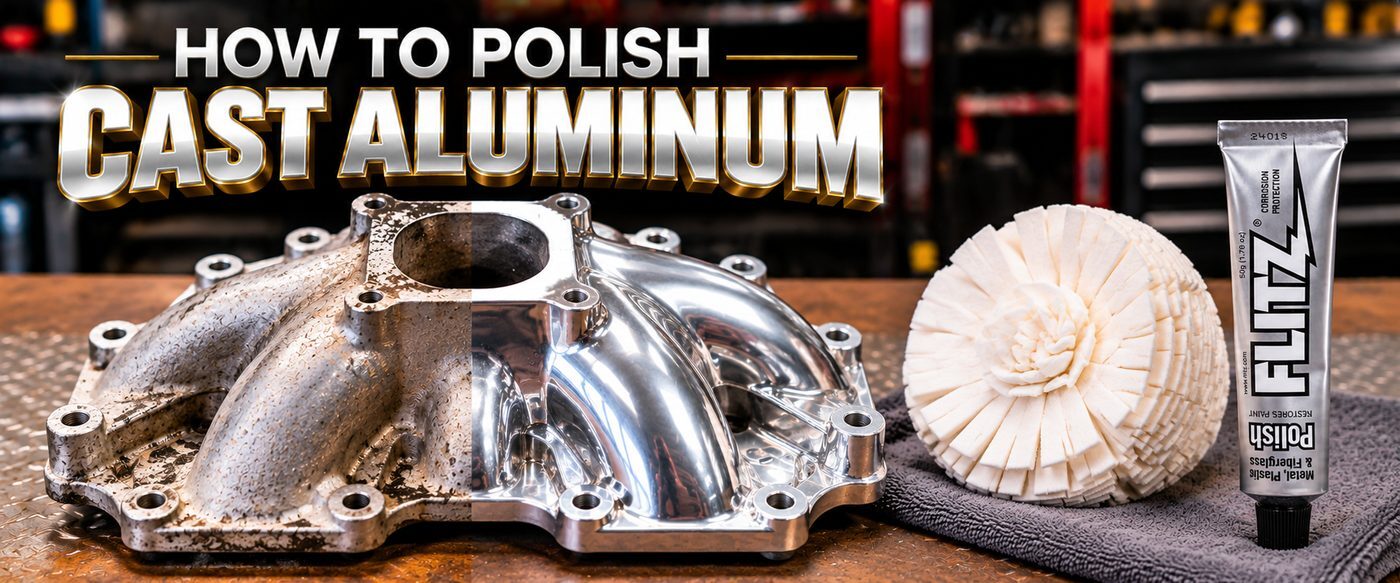
- Flitz Buff Ball and a drill for faster polishing on larger surfaces (optional)
- Wet/dry sandpaper for scratched or heavily oxidized aluminum (only if needed)
- Flitz Metal PreClean for stubborn oxidation and corrosion, when appropriate
- Flitz Ceramic Sealant for added protection after polishing (optional)
The exact process depends on the condition and texture of the cast aluminum.
Step 1: Clean the Cast Aluminum
Always start with a clean surface.
Wash away loose dirt, grease, grime, and other contamination using mild soap and water. A soft brush can help clean textured cast aluminum and recessed areas.
Rinse thoroughly and dry the aluminum completely with a clean microfiber cloth.
Don't start polishing over dirt. Contamination trapped between your polishing cloth and the aluminum can interfere with the finish and potentially create additional scratches.
Step 2: Inspect the Aluminum Before Sanding
This is an important step because not all cast aluminum needs to be sanded.
If the aluminum is simply dull, lightly oxidized, stained, or has lost its shine, try polishing a small test area first. You may be able to restore the surface without sanding at all.
Sanding becomes more useful when you're dealing with problems such as:
- Deep scratches
- Heavy oxidation
- Pitting
- Significant surface damage
- An uneven finish that needs to be leveled
Avoid removing material unnecessarily. The less aggressive method that produces the result you want is generally the better place to start.
Step 3: Address Heavy Oxidation
Heavily oxidized cast aluminum may need additional preparation before polishing.
For appropriate bare-metal applications, Flitz Metal PreClean can help tackle stubborn oxidation and corrosion before the polishing stage. Follow the product directions and always test an inconspicuous area first, especially if you're unsure whether the aluminum has a coating or specialty finish.
Once the surface is clean and the heavy oxidation has been addressed, rinse or wipe the surface as directed and allow it to dry.
Step 4: Sand Damaged Cast Aluminum Only When Necessary
If scratches, pitting, or severe oxidation remain, progressive sanding may be required.
Start with a grit appropriate for the severity of the damage rather than automatically beginning with very coarse sandpaper. Gradually move to finer grits, making sure the scratches from the previous grit have been refined before moving to the next.
The goal isn't simply to make the aluminum shiny. It's to create a progressively smoother and more uniform surface that can then be polished.
Important: Cast aluminum naturally varies in texture. Aggressive sanding can change that original cast appearance. If preserving the factory texture matters, avoid sanding unless it's truly necessary.
Step 5: Polish the Cast Aluminum
Once the aluminum is clean and properly prepared, it's time to polish.
Apply a small amount of Flitz Paste Polish to the surface or a clean microfiber cloth. Work the polish into a manageable section at a time.
Use firm, controlled pressure and continue working the area as the polish removes oxidation and refines the surface.
Then buff away the residue with a clean microfiber cloth.
You'll often notice the aluminum becoming brighter as you work. Repeat the process on stubborn areas as necessary.
Step 6: Use a Buff Ball for Larger Areas
For larger cast aluminum surfaces, hand polishing can become time-consuming.
A Flitz Buff Ball can be used with a drill to make polishing larger or more complicated surfaces faster and easier. Its shape is particularly useful for reaching contours and areas that can be awkward to polish by hand.
Apply the polish according to the directions and work systematically rather than staying in one spot for too long.
For small parts, intricate details, edges, and tight areas, hand polishing may still provide better control.
Can You Polish Cast Aluminum to a Mirror Finish?
Sometimes—but the answer depends heavily on the casting.
Cast aluminum can have pores, pits, grain, and an uneven surface created during manufacturing. Simply applying more polish won't necessarily turn a rough casting into a mirror.
Achieving a true mirror-like finish may require progressively sanding and refining the aluminum before polishing. The smoother the underlying surface becomes, the more reflective the final finish can become.
However, a mirror finish isn't always desirable. Many cast aluminum parts look best when they're simply restored to a clean, bright appearance while retaining some of their original cast texture.
How to Polish Cast Aluminum Without Sanding
If your aluminum isn't deeply scratched or severely oxidized, try this simpler process first:
- Wash and completely dry the aluminum.
- Test Flitz Paste Polish on a small area.
- Polish the surface by hand with a clean microfiber cloth or use a Buff Ball on suitable larger areas.
- Buff away the residue with a clean cloth.
- Repeat on stubborn areas as necessary.
Starting with polishing instead of sanding can save considerable time while preserving more of the original surface.
Protect Cast Aluminum After Polishing
Freshly polished aluminum looks great, but exposure to moisture, road grime, fingerprints, and the environment can gradually dull the finish again.
After you've achieved the finish you want, consider applying Flitz Ceramic Sealant to help protect the polished surface.
Keeping the aluminum clean and periodically maintaining the finish can also make future polishing much easier than waiting for heavy oxidation to return.
Cast Aluminum Polishing Tips
A few simple practices can make a big difference:
- Always test an inconspicuous area first.
- Determine whether the aluminum is bare, painted, anodized, clear-coated, or otherwise finished before using an aggressive restoration method.
- Start with the least aggressive method.
- Don't sand aluminum just because it's dull.
- Use clean microfiber cloths so you're not putting contaminants back onto the surface.
- Work in manageable sections.
- Don't expect rough cast aluminum to become mirror-smooth from polish alone.
- Protect the surface once you've achieved the finish you want.
Frequently Asked Questions About Polishing Cast Aluminum
What is the best way to polish cast aluminum?
Start by thoroughly cleaning and inspecting the aluminum. If it is only dull or lightly oxidized, try polishing before sanding. More severe scratches, pitting, or oxidation may require additional surface preparation before the final polishing step.
Can you polish cast aluminum without sanding?
Yes. Many cast aluminum surfaces can be polished without sanding when the underlying metal is in good condition. Sanding is primarily useful when surface defects need to be removed or leveled.
How do you make cast aluminum look like chrome?
Creating an extremely reflective finish requires the underlying aluminum to be very smooth. Rough or porous cast aluminum may require substantial surface refinement and progressive sanding before polishing. Even then, polished aluminum will not actually become chrome; it can only develop a highly reflective aluminum finish.
How do you clean and polish oxidized cast aluminum?
First remove dirt and surface contamination. Evaluate the severity of the oxidation, treating heavier oxidation appropriately before polishing. Once the surface is properly prepared and dry, use a metal polish such as Flitz Paste Polish and buff the surface to the desired finish.
How often should cast aluminum be polished?
There's no fixed schedule. It depends on where the aluminum is used and how much moisture, weather, road grime, chemicals, and handling it encounters. Routine cleaning and protection can reduce how frequently intensive polishing is necessary.
Bring Back the Shine
Learning how to polish cast aluminum starts with understanding the condition of the surface. Some pieces need extensive preparation, while others may need little more than a thorough cleaning and a good polish.
Start gently, address damage only when necessary, and progressively work toward the finish you want.
With Flitz Paste Polish for polishing, the Flitz Buff Ball for faster powered buffing, Metal PreClean when heavier oxidation needs attention, and Ceramic Sealant for protection afterward, you can build a complete cast aluminum restoration process without making the job more aggressive than it needs to be.