
How to Clean Eisenglass & Vinyl Boat Windows
Posted by Flitz Premium Polishing Products on 25th Jul 2022
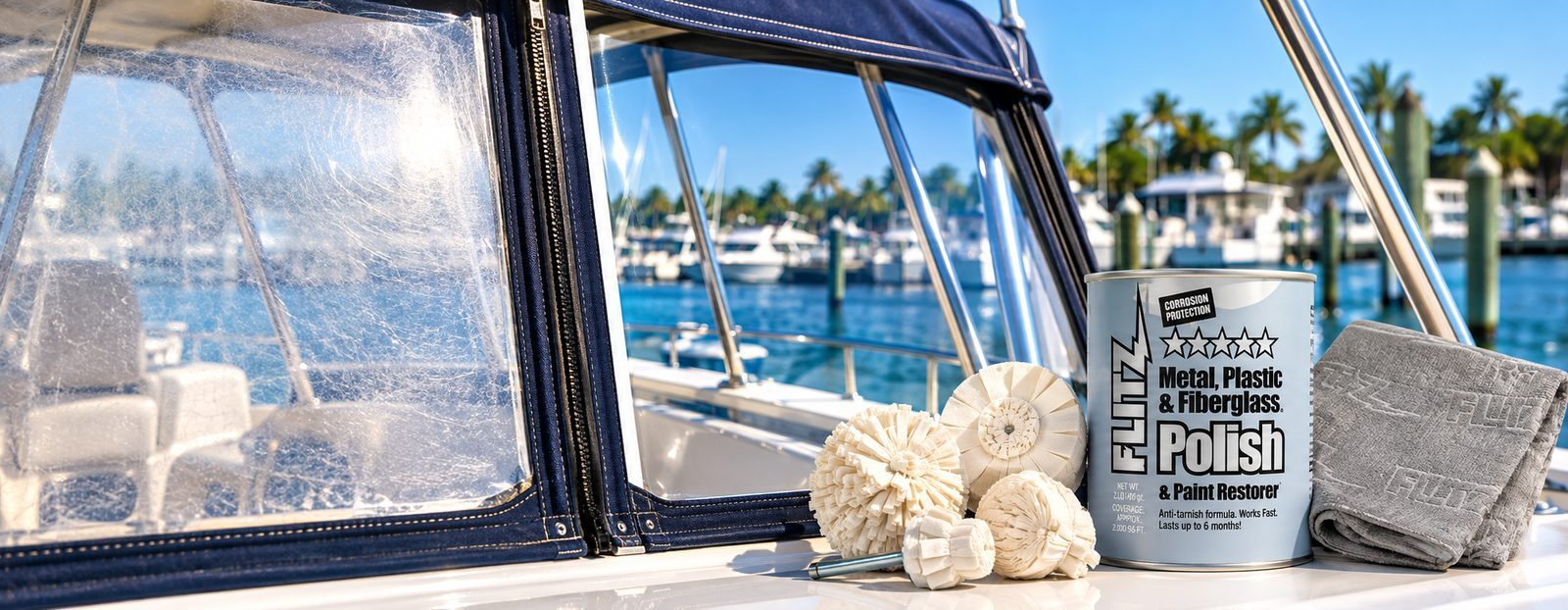
Cloudy, dirty, or yellowed Eisenglass windows can make it difficult to enjoy the view from your boat. Salt spray, sun exposure, dirt, and everyday wear can gradually affect the appearance of flexible clear-vinyl windows and marine enclosures.
If you're wondering how to clean Eisenglass or Isinglass boat windows, start by identifying the window material. Some flexible vinyl panels can be cleaned and carefully polished to improve clarity, while coated marine windows such as Strataglass require different products and care procedures.
Whether you're cleaning everyday buildup or evaluating cloudy boat windows, here's how to choose the right approach and determine when restoration may be possible.
What Is Eisenglass or Isinglass?
The terms Eisenglass and Isinglass are commonly used by boat owners to describe flexible clear-vinyl windows found in boat enclosures, dodgers, and other marine canvas installations.
These transparent panels help protect passengers from wind, rain, and spray while maintaining visibility.
However, not every clear boat window is made from the same material.
Some are ordinary flexible vinyl, some have specialized protective coatings, and others are made from rigid acrylic or polycarbonate.
The correct cleaning and polishing method depends on the window's actual material and finish.
Why Does Eisenglass Become Cloudy?
Several conditions can affect the appearance of clear-vinyl boat windows:
-
Salt and surface deposits: Dried salt, dirt, and residue may create a cloudy film.
-
Water spots and environmental buildup: Repeated exposure to spray and weather can leave visible deposits.
-
Fine surface scratches: Improper cleaning, grit, or repeated contact with rough materials may create haze.
-
Aging and UV exposure: Some flexible vinyl can become yellowed or lose clarity over time.
-
Coating deterioration: Damage to a protective coating can create cloudy areas that ordinary polishing will not repair.
Understanding the cause is important. Surface deposits may be removable through cleaning, but severe yellowing, internal haze, and coating damage may not respond to polishing.
Identify Your Boat Window Material Before Cleaning
Before using a cleaner or polish, determine what kind of window you have.
Ordinary Flexible Clear Vinyl
Many boat enclosures use flexible clear-vinyl panels.
Routine cleaning typically involves fresh water and a manufacturer-approved cleaning method.
Some uncoated vinyl materials may also be suitable for polishing, depending on their condition and the manufacturer's recommendations.
Strataglass and Other Coated Marine Vinyl
Strataglass has a specialized protective coating and must be maintained according to its manufacturer's instructions.
Do not use Flitz Metal Polish, BuffBall, Ceramic Sealant, or general-purpose vinyl polishing products on Strataglass.
Strataglass specifically recommends IMAR Strataglass Protective Cleaner and Protective Polish.
Review the official Strataglass care and maintenance instructions before cleaning these windows.
Other coated marine-vinyl products may have their own restrictions. Always confirm the brand and approved care products.
Acrylic and Polycarbonate Windows
Rigid plastic boat windows may be acrylic or polycarbonate rather than flexible vinyl.
These materials have different surface properties, and some products include coatings that require special care.
Do not assume a polishing method recommended for ordinary Eisenglass is appropriate for rigid plastic windows.
Not Sure Which Material You Have?
Contact the boat manufacturer, enclosure fabricator, or window supplier before selecting a cleaning or polishing product.
Identifying the material first can help prevent damage that may be difficult or impossible to reverse.
How to Clean Eisenglass and Clear Vinyl Boat Windows
For routine maintenance, the goal is to remove salt, dirt, and environmental buildup without scratching the surface.
Follow these steps only where they are consistent with the window manufacturer's cleaning recommendations.
Step 1: Rinse Thoroughly with Fresh Water
Start by gently rinsing the clear-vinyl windows with clean, fresh water.
This helps remove loose salt, sand, dust, and debris before wiping the surface.
Avoid rubbing dry dirt across the window, which could create fine scratches.
Step 2: Use a Manufacturer-Approved Cleaner
If the manufacturer permits it, gently wash ordinary flexible clear vinyl using an appropriate mild cleaning solution.
Some vinyl manufacturers allow mild soap and water; others specify particular marine cleaners.
Follow the instructions for your specific material rather than assuming every clear boat window can be cleaned the same way.
For Strataglass, use its specified IMAR cleaning products and procedures.
Step 3: Clean with an Appropriate Soft Cloth
Use a clean, soft microfiber cloth or suitable synthetic chamois when approved for the window material.
Work gently without applying unnecessary pressure.
Avoid abrasive pads, dirty towels, stiff brushes, and aggressive scrubbing.
Do not use paper towels if the window manufacturer advises against them, as they may leave fine marks on delicate vinyl.
Step 4: Rinse and Dry Carefully
Remove remaining cleaning solution according to the window manufacturer's instructions.
Dry gently with an approved clean cloth or chamois, or allow the panels to air-dry when appropriate.
Inspect the windows in natural light after cleaning.
If the cloudiness has disappeared, the problem may have been primarily surface buildup.
If haze remains, evaluate the material before attempting polishing.
What Cleaners Should You Avoid on Eisenglass?
Using an unsuitable product can permanently affect the appearance of clear-vinyl boat windows.
Unless the window manufacturer expressly approves them, avoid:
-
Household glass cleaners containing ammonia or other incompatible ingredients
-
Rough scrubbing pads or abrasive cleaning tools
-
Household furniture polishes and waxes
-
Aggressive scratch-removal compounds
-
Strong solvents or chemical cleaners
-
Unapproved automotive sealants and protectants
-
Excessive pressure or machine polishing
Also take care to keep sunscreen, insect repellent, and other potentially damaging chemicals away from clear marine windows.
Some coated products, especially Strataglass, have specific restrictions beyond these general precautions.
When in doubt, follow the window manufacturer's approved care instructions.
How to Clean Cloudy Isinglass Windows
Cloudiness does not always mean a boat window needs polishing.
Start by determining whether the problem is on the surface or within the material.
Cloudiness Caused by Dirt or Salt
If the haze is caused by salt, environmental deposits, or grime, appropriate cleaning may improve clarity.
Begin with the gentle rinsing and cleaning method recommended for your window.
Light Surface Haze or Oxidation
Some compatible, uncoated flexible-vinyl windows may develop light surface haze that responds to an approved polishing treatment.
The results depend on the age, condition, and construction of the material.
Yellowed or Severely Aged Vinyl
Long-term aging and UV exposure can cause changes within the vinyl itself.
Cleaning or polishing cannot necessarily reverse these changes.
Severely yellowed, brittle, distorted, or deteriorated windows may require professional assessment or replacement.
Damaged Protective Coatings
If the cloudiness comes from a damaged coating, applying polish may make the condition worse.
Do not attempt to remove a protective coating through ordinary polishing.
Contact the window manufacturer or enclosure supplier for guidance.
Can You Polish and Restore Eisenglass?
Some ordinary, uncoated Eisenglass and flexible-vinyl boat windows can benefit from polishing when the manufacturer approves it.
Flitz Paste and Liquid Metal Polish are formulated for use on a range of compatible surfaces, including certain flexible clear-vinyl materials.
On suitable surfaces, careful polishing may improve the appearance of light oxidation, staining, and some surface haze.
However, polishing does not guarantee the removal of deep scratches, severe yellowing, internal cloudiness, or damaged coatings.
Before beginning, verify that your particular window material is suitable for polishing.
How to Polish Compatible Uncoated Eisenglass
If the window manufacturer permits polishing and the material is compatible with Flitz:
-
Clean the window first. Remove all loose dirt, salt, and debris using an approved cleaning method.
-
Test a small area. Apply a little polish to an inconspicuous section and inspect the results before proceeding.
-
Apply a thin layer. Spread a small amount of Flitz Paste Metal Polish or Flitz Liquid Metal Polish onto a clean, soft cloth.
-
Work gently. Polish a small section by hand using light pressure and the product's instructions.
-
Remove residue promptly. Do not allow the polish to dry on the surface. Buff away residue with a separate clean cloth.
-
Inspect the results. Check clarity and the surface finish before working on additional areas.
Repeat only where the window manufacturer permits it and where the surface is responding appropriately.
If the treatment produces additional haze, distortion, or unexpected marks, discontinue polishing.
Avoid aggressive machine polishing on flexible vinyl unless the window manufacturer and equipment instructions specifically approve the method.
Never apply this procedure to Strataglass or other coated windows that prohibit general-purpose polishing compounds.
Which Flitz Polish Should You Use for Compatible Eisenglass?
For approved, uncoated clear-vinyl applications, Flitz offers two polishing formats.
Flitz Paste Metal Polish
Flitz Paste Metal Polish is a concentrated cream formula that provides controlled application for compatible metal, plastic, fiberglass, and other suitable surfaces.
Its concentrated consistency may be useful when polishing small areas by hand.
Use it on clear vinyl only when the window manufacturer permits that application.
Flitz Liquid Metal Polish
Flitz Liquid Metal Polish offers an easy-to-spread formula that can be convenient when working on larger compatible surfaces.
As with the paste, confirm that your specific vinyl material can be polished before use.
Flitz Premium Microfiber Polishing Cloth
A clean, soft cloth is important for appropriate cleaning and polishing.
The Flitz Premium Microfiber Polishing Cloth can be used for compatible surface-care tasks, including gently removing polishing residue.
Always follow the window manufacturer's fabric and cleaning-tool recommendations.
For more product comparisons, read our Flitz Liquid vs. Paste Polish guide.
How to Keep Clear Vinyl Boat Windows Looking Their Best
Regular care is generally easier than attempting to restore heavily weathered windows.
Rinse After Boating
Where recommended by the manufacturer, rinse salt and environmental debris from the windows after outings.
This can help prevent buildup.
Use Approved Cleaning Products
Keep the appropriate cleaner for your window material on board.
Avoid experimenting with household products or general-purpose polishes on coated vinyl.
Protect the Windows During Storage
Follow the enclosure manufacturer's recommendations for rolling, folding, and storing flexible panels.
Avoid placing rough or dirty materials against the clear surfaces.
Prevent Unnecessary Scratches
Make sure cleaning cloths are free of grit and debris.
Never scrub dried salt or dirt across the surface.
Inspect the Windows Regularly
Look for developing haze, yellowing, distortion, cracking, or damage to protective coatings.
Address problems using approved methods before attempting restoration.
Frequently Asked Questions About Eisenglass and Isinglass
How do you clean Eisenglass boat windows?
Start by identifying the window material. For ordinary flexible clear vinyl, rinse away loose salt and dirt, then follow the manufacturer's approved cleaning and drying instructions.
Coated products such as Strataglass require their own specified care products.
Is Eisenglass the same as Isinglass?
In boating discussions, both spellings are commonly used to refer to flexible clear marine enclosure windows.
However, the names alone do not identify a specific vinyl formulation or protective coating.
Can you restore cloudy Isinglass?
Sometimes. Surface deposits and certain types of light haze may respond to appropriate cleaning or approved polishing.
Severe aging, internal yellowing, or damaged protective coatings may not be restorable through ordinary polishing.
How do you remove yellowing from clear vinyl boat windows?
First determine whether the discoloration is surface buildup or deterioration within the vinyl.
An approved cleaning or polishing method may improve some surface discoloration, but deep or permanent yellowing may require replacement.
Can you polish scratches out of Eisenglass?
Some very light surface marks on compatible uncoated vinyl may improve through approved polishing.
Deeper scratches, distortion, and coating damage may remain. Avoid aggressive polishing or attempting to remove excessive material.
Can Flitz Polish be used on Strataglass?
No. Strataglass directs owners to use its approved IMAR care products and warns against cleaners, polishes, and scratch removers designed for ordinary vinyl or plastic.
Follow the Strataglass care instructions.
What's the best cleaner for Eisenglass?
The best cleaner is one approved by the manufacturer of your particular window material.
Ordinary flexible vinyl and coated marine windows can have very different requirements.
Should I replace cloudy boat windows or try polishing?
If the window is made from compatible, uncoated flexible vinyl and has light surface haze, approved cleaning or polishing may be worth evaluating.
For severe yellowing, cracking, permanent distortion, or damaged coatings, consult a marine enclosure specialist about repair or replacement.
Restore Clarity with the Right Marine Window Care
Clear boat windows make boating more enjoyable, but preserving visibility starts with choosing the right care method.
For routine maintenance, identify the material, remove salt and dirt gently, and follow the manufacturer's cleaning recommendations.
For compatible, uncoated Eisenglass and clear-vinyl windows, Flitz Metal Polish may help improve certain types of surface haze and discoloration when polishing is approved.
Explore Flitz Paste Metal Polish, Flitz Liquid Metal Polish, and our complete range of Flitz Marine Care Products for your compatible boat-cleaning and polishing projects.
Clean. Polish. Protect. Enjoy a clearer view on the water.