
How to Store a Gun to Prevent Rust: Hunting Season & Long-Term Storage
Posted by Flitz Premium Polishing Products on 15th Oct 2026
A firearm can look perfectly clean at the end of hunting season and still develop rust while sitting in storage. Moisture, fingerprints, humidity, condensation and leftover residue can all attack metal surfaces over time—especially if a gun is put away damp after a day in the field.
If you’re wondering how to store a gun to prevent rust, the answer is more than simply putting it in a safe. Proper storage starts with cleaning away moisture and residue, protecting exposed surfaces and controlling humidity wherever the firearm is stored.
Whether you’re putting a hunting rifle away between trips or preparing a firearm for long-term storage, a few simple habits can make a major difference.
Why Do Guns Rust in Storage?
Rust forms when iron or steel is exposed to moisture and oxygen. Even when a firearm appears dry, moisture can come from several sources:
- Rain, snow or damp hunting conditions
- Humidity inside a gun safe or cabinet
- Condensation caused by temperature changes
- Fingerprints and skin oils left on metal surfaces
- Residue left behind after shooting
- Damp fabric, foam or cases used for storage
Blued steel is particularly important to protect because the finish does not make the underlying steel immune to corrosion.
Stainless steel is more corrosion resistant, but it can still discolor or develop surface rust under the right conditions.
Always Start With a Safe, Unloaded Firearm
Before cleaning, inspecting or storing any firearm, make sure it is completely unloaded and keep ammunition separate from the work area.
Follow the firearm manufacturer’s instructions for cleaning and maintenance, and store firearms securely according to applicable laws and safe-storage practices.
Once the firearm is safe to handle, you can focus on preparing it for storage.
Clean Your Gun Before Putting It Into Storage
One of the easiest ways to prevent gun rust is to avoid storing a firearm with moisture, fingerprints or shooting residue still on it.
After hunting or shooting, inspect the firearm carefully and clean it as needed before putting it away. For more gun cleaning and firearm care products, explore our full Sporting collection.
Pay particular attention to:
- The barrel and bore
- Exterior metal surfaces
- Trigger guards and other frequently touched areas
- Screws, pins and recessed metal surfaces
- Areas exposed to rain, snow or condensation
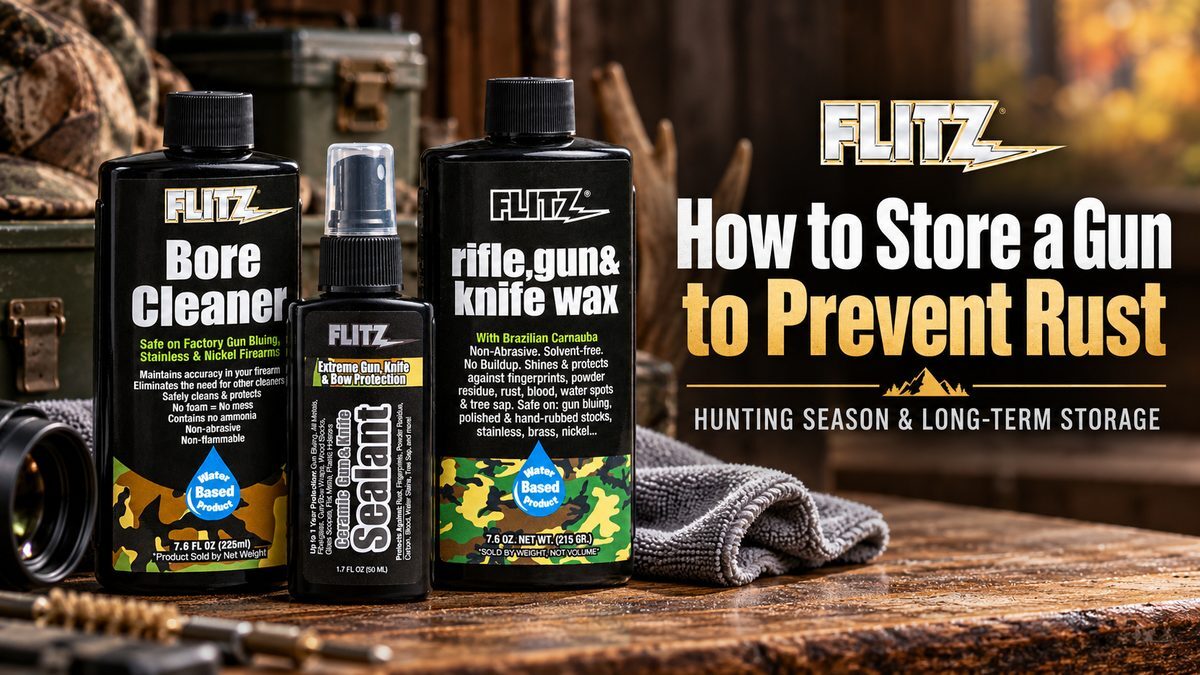
Flitz Gun Bore Cleaner can be used as part of your firearm-maintenance routine to help clean and polish the bore before storage.
If the firearm has been exposed to wet weather, don’t simply wipe the outside and immediately place it in a closed case. Make sure the firearm is thoroughly dry first.
Remove Fingerprints Before Storage
Fingerprints may seem harmless, but oils, salts and moisture from your hands can remain on metal surfaces long after the firearm is put away.
That is one reason rust sometimes appears in the shape of fingerprints on blued or polished metal.
Before storing your firearm, wipe down exterior metal surfaces with a clean microfiber cloth. This is especially important on areas you handled while unloading, cleaning or carrying the firearm.
A clean surface gives your protective coating a better chance to do its job.
Protect Exterior Metal From Rust
After the firearm has been cleaned and dried, apply a protective layer to exterior surfaces that are vulnerable to moisture, fingerprints and corrosion.
Flitz Rifle, Gun & Knife Wax is made with carnauba and beeswax and can be used on blued, polished, stainless steel, nickel and plated finishes. It is also suitable for polished and hand-rubbed gun stocks and is silicone-free.
For firearms where you want to preserve the original appearance without adding gloss, Flitz Gun Ceramic Sealant offers another option. The ceramic-based protectant dries transparent and leaves the original finish looking unchanged, making it a good choice for matte, satin and other low-gloss firearm finishes.
Both products can be part of a rust-prevention routine. The better choice depends on the firearm’s finish and the look you want to maintain.
Apply your chosen protectant according to its directions. Buff or allow it to finish as directed for that product. The goal is a clean, protected surface that helps resist moisture, fingerprints and environmental exposure while the firearm is stored.
How to Store a Gun to Prevent Rust
Once the firearm is clean, dry and protected, the storage environment becomes the next priority.
A secure gun safe or firearm-storage cabinet should remain as dry and stable as reasonably possible.
To reduce the chance of rust:
- Store firearms only after they are completely dry.
- Control excess humidity in the storage area.
- Use a safe dehumidifier or moisture-control product when appropriate.
- Inspect stored firearms periodically.
- Avoid leaving a wet firearm sealed inside a case.
- Keep the storage area clean and free from unnecessary moisture.
- Reapply protective products as needed according to their directions.
Humidity control is particularly important in basements, garages and other areas where temperature and moisture levels can fluctuate.
Can Guns Rust in a Gun Safe?
Yes. A gun safe protects firearms from unauthorized access, but it does not automatically eliminate humidity.
If humid air becomes trapped inside the safe, metal surfaces may still develop corrosion.
This is why the search question “why is my gun rusting in a safe?” has a simple answer: the safe may be secure, but the environment inside it can still contain moisture.
A humidity monitor can help you understand the conditions inside your storage area. Depending on the environment, a dehumidifier or other moisture-control system may also be appropriate.
Periodic inspections are important as well. Don’t assume a firearm is protected indefinitely simply because it is inside a safe.
Should You Store a Gun in a Soft Case?
Soft cases are convenient for transportation, but they may not be the best choice for long-term firearm storage.
Fabric and foam can hold moisture, particularly after hunting in rain, snow or humid conditions.
If you transport a firearm in a case after a wet day in the field, remove it when you get home, allow it to dry completely, and perform the appropriate cleaning and protection before long-term storage.
For longer storage periods, use a secure storage method designed for firearms and pay attention to humidity control.
What Should You Do After Hunting in Rain or Snow?
Wet-weather hunting is one of the situations where rust prevention matters most.
Once you return from the field:
- Make sure the firearm is unloaded and safe.
- Remove visible moisture from exterior surfaces.
- Allow the firearm to dry thoroughly.
- Clean the firearm according to the manufacturer’s recommendations.
- Wipe away fingerprints and handling residue.
- Apply appropriate protection to vulnerable metal surfaces.
- Store the firearm only after it is clean and dry.
Pay attention to areas where water can collect unnoticed, including around screws, seams and hardware.
The biggest mistake is putting a damp firearm directly into a case or safe and forgetting about it.
How Soon Should You Clean Your Gun After Shooting?
How often a firearm needs cleaning depends on the firearm, ammunition, conditions and manufacturer recommendations.
But if the firearm has been exposed to moisture, rain, snow, dirt or heavy residue, it is better to address those conditions before long-term storage rather than waiting.
For a hunting firearm, a good habit is to inspect it after every outing. For a full step-by-step routine, see our guide to firearm cleaning and maintenance.
That does not necessarily mean every firearm requires the exact same deep-cleaning routine after every trip. It means you should check for moisture, dirt, residue and corrosion and take care of anything that could cause problems during storage.
How Often Should You Check a Gun in Storage?
Long-term storage should not mean “put it away and forget about it.”
Inspect stored firearms periodically for:
- Surface rust
- Moisture
- Fingerprints
- Changes in the finish
- Humidity problems inside the safe
- Protective coatings that may need to be renewed
The more humid or variable the storage environment, the more important these checks become.
Regular inspection can catch a small surface issue before it becomes a larger restoration problem.
What About Wood Gun Stocks?
Metal isn’t the only part of a firearm that benefits from proper care.
Flitz Rifle, Gun & Knife Wax can also be used on polished and hand-rubbed gun stocks, helping protect the finished surface from fingerprints, moisture and normal handling.
Always follow the firearm or stock manufacturer’s care recommendations, particularly with specialty finishes or unfinished wood.
What If You Already Find Surface Rust?
If you discover rust during an inspection, deal with it early.
The correct method depends on the firearm finish and severity of the corrosion. Avoid aggressive abrasives that could damage bluing, engraving or other finishes.
For light surface problems, use products appropriate for the particular finish and follow the firearm manufacturer’s recommendations.
If corrosion is severe, deeply pitted or located in an area where firearm function or safety could be affected, have the firearm inspected by a qualified gunsmith rather than attempting an aggressive restoration yourself.
Build Rust Prevention Into Your Hunting Routine
The easiest time to prevent rust is before it starts.
After a day in the field, take a few minutes to inspect your firearm before putting it away. Remove moisture and fingerprints, clean away residue when needed, apply appropriate surface protection and make sure your storage environment stays dry.
Flitz Gun Bore Cleaner, Flitz Rifle, Gun & Knife Wax and Flitz Gun Ceramic Sealant can all fit into a firearm-care routine. The Bore Cleaner helps clean and polish the bore, while the wax and ceramic sealant provide different options for protecting exterior surfaces during storage.
A little maintenance at the end of hunting season can help keep your firearm clean, protected and ready for the next time you need it.